Listen to how the pushed valve amplifier adds even-order harmonic grit and dynamic compression to Chuck Berry's opening double-stop licks. Recorded at Chess Studios in Chicago, this tone defined rock 'n' roll guitar.
Notice the natural tape slapback echo combined with the forward midrange push of an open-back valve combo. The amplifier is not merely magnifying the guitar; it is acting as a primary sound-shaping instrument.
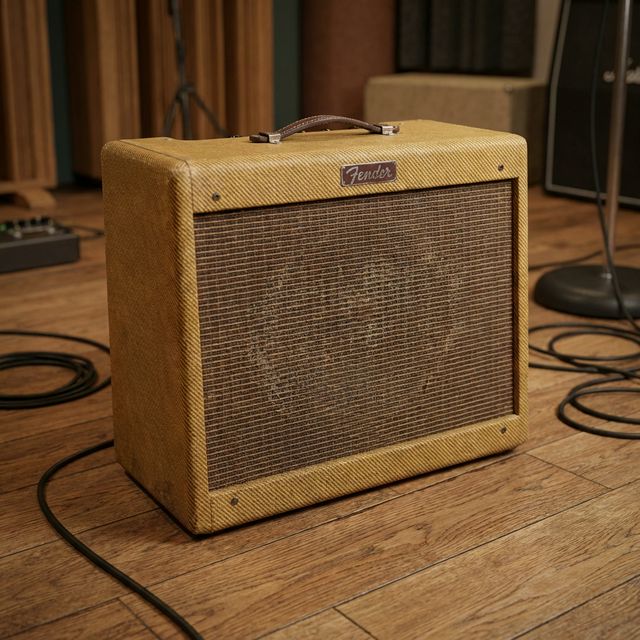
In the 1930s and 40s, archtop acoustic guitars were physically incapable of competing with the blaring horn sections of big bands. Pioneers like George Beauchamp ('The Frying Pan') and Charlie Christian attached electromagnetic pickups, demanding an electrical solution.
Over the next 70 years, amplifiers evolved from modest 10-watt radio-circuit combos into high-voltage 100-watt tube stacks, solid-state transistor clean machines, and modern mathematical DSP modellers running on stage and in the studio.
Listen to the crystal-clear articulation in Les Paul's rapid staccato picking. To execute up to 24 layers of sound-on-sound recording on his modified Ampex tape recorder, his guitar tone required maximum clarity and zero flabby distortion.
Every transient note pops through the dense vocal overdubs of Mary Ford. Notice how early low-wattage valve combos maintained linear fidelity at moderate recording volumes before the concept of intentional guitar overdrive existed.
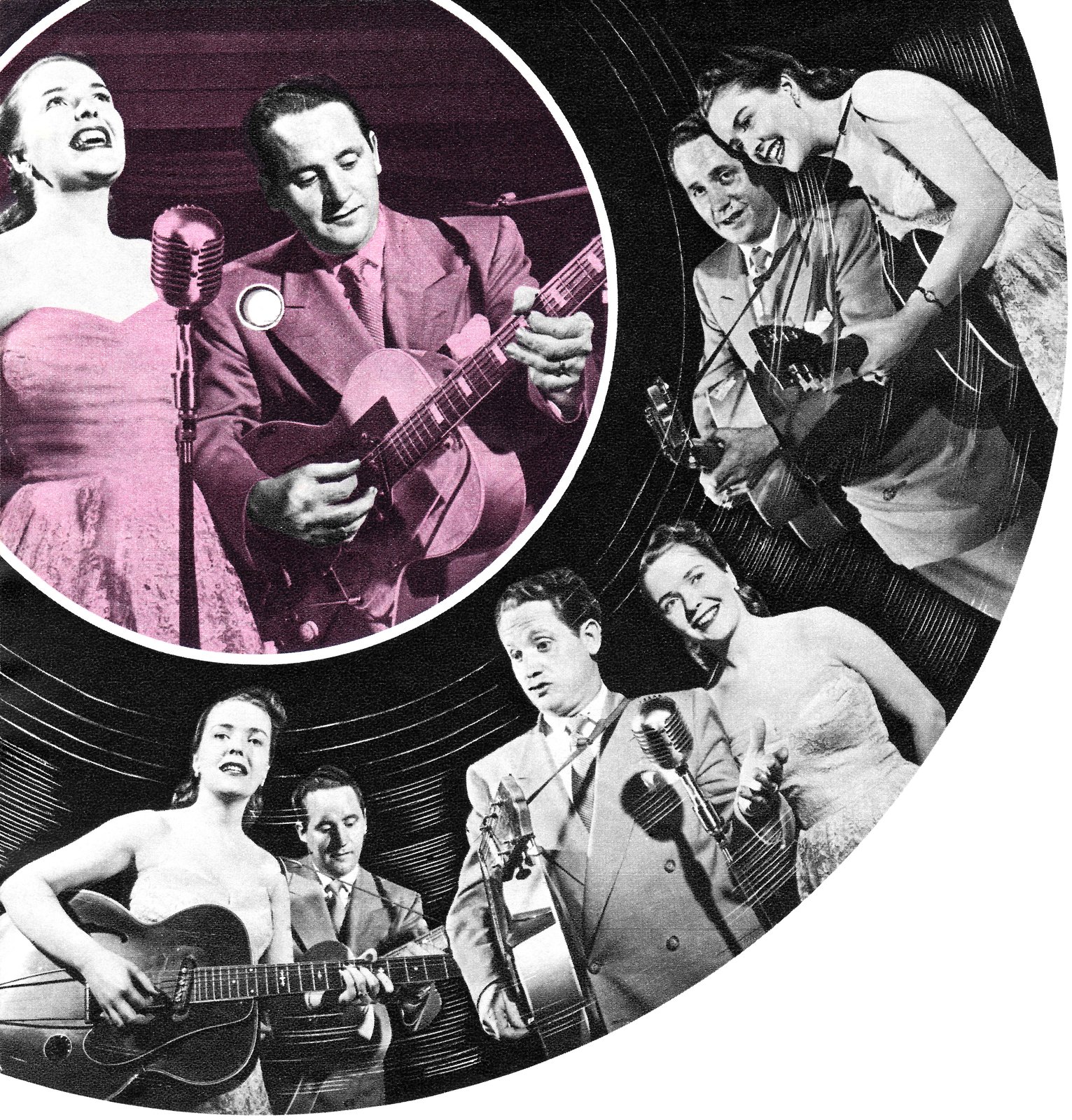
In 1941, jazz virtuoso Les Paul built 'The Log'—a 4x4 pine block with guitar neck and pickups attached inside an Epiphone hollowbody shell. Hollowbody guitars fed back uncontrollably when amplified loudly; a solid core eliminated resonant howling.
Les Paul worked closely with Gibson and custom audio builders to create amplifiers that reproduced the wide frequency spectrum of his custom wound pickups without early harmonic distortion, laying the technical foundation for the 1952 Gibson Les Paul guitar.
Link Wray's 'Rumble' was banned on several US radio stations for its menacing, aggressive tone—despite having no lyrics! Listen to the visceral power chord sustain and speaker cone compression as the valve amplifier is pushed into natural saturation.
Notice how the lower register chords push the output valves into compression while the pulsating opto-tremolo chops the signal, creating a dark, hypnotic rockabilly instrumental masterpiece.
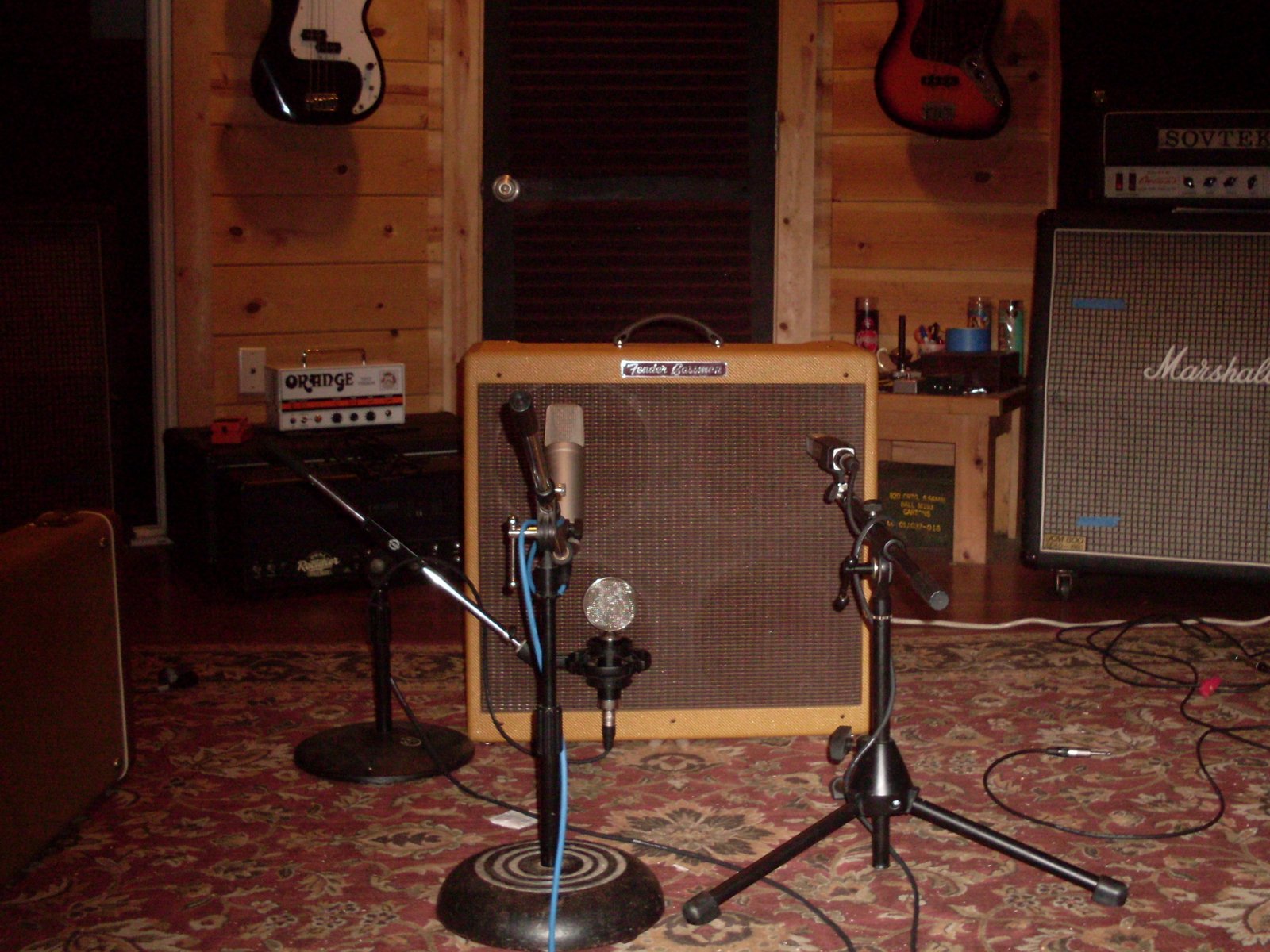
In 1952, Leo Fender introduced the Precision Bass, needing an amplifier that could handle low frequencies. By 1959, he perfected the 5F6-A circuit: a 45-watt powerhouse housed in a lacquered tweed cabinet loaded with four 10-inch Jensen Alnico speakers.
Guitarists quickly discovered that when cranked, the Bassman produced a thick, musical, touch-sensitive crunch that single 12-inch amps could not match. In 1962, Jim Marshall literally copied this exact schematic to create the Marshall JTM45.
The song begins with the most famous opening chord in rock history (a combination of George Harrison's Rickenbacker 360/12 through a Vox AC30, John Lennon's Gibson J-160E, and Paul McCartney's Hofner bass, doubled by George Martin on piano).
Throughout the rhythm track, listen to the biting, bell-like upper midrange (2 kHz – 4 kHz). The Vox AC30's EL84 valves and Celestion Alnico Blue speakers deliver zero muddy bass, ensuring every jangly string cuts through the Abbey Road mono mix.
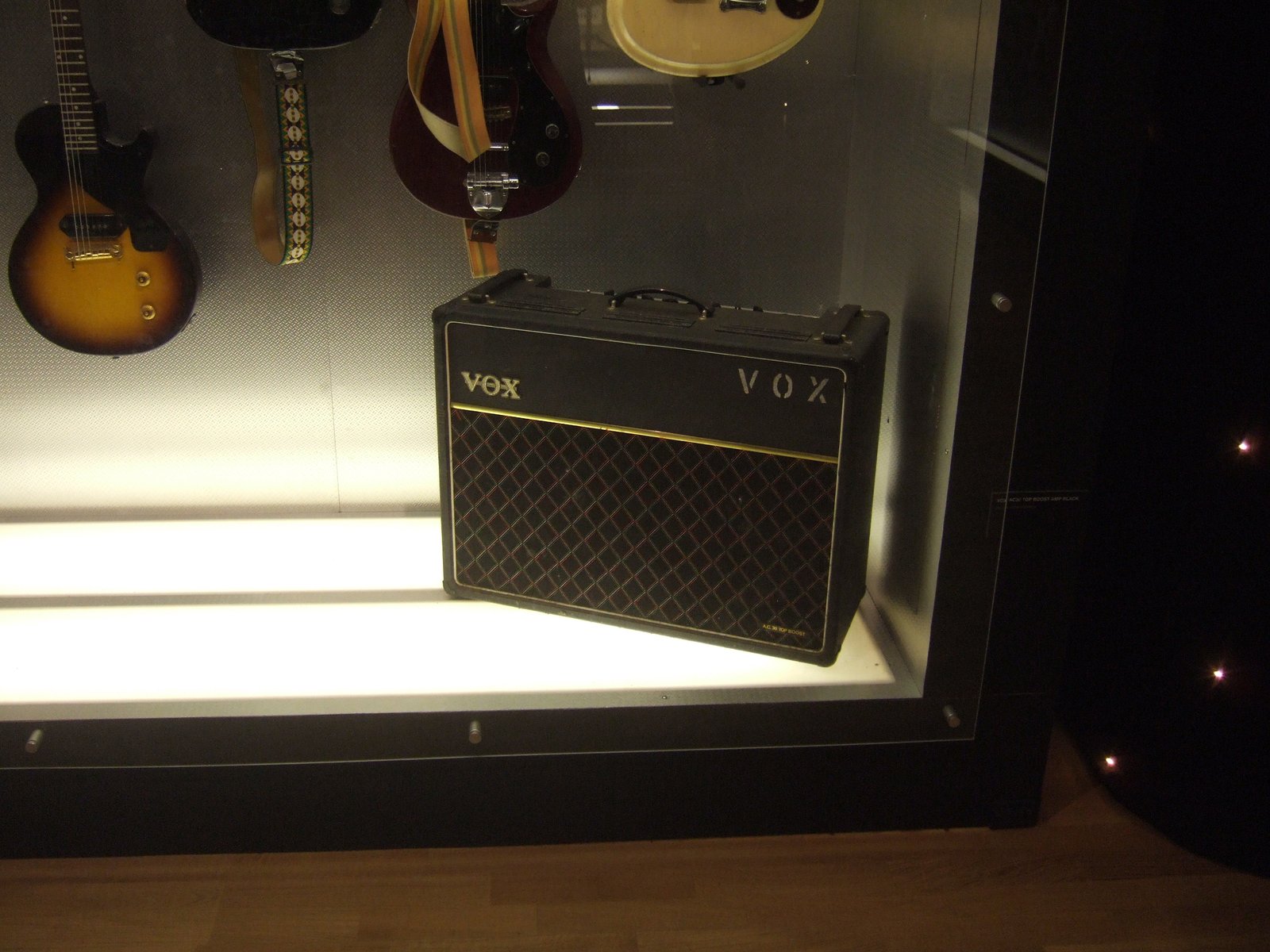
In 1959, guitarists in London were desperate for more volume to be heard in dance halls. Dick Denney and Tom Jennings of Jennings Musical Instruments (JMI) in Dartford, Kent doubled the power of their popular AC15 to create the AC30.
When Beatlemania exploded, Vox signed an exclusive equipment deal with Brian Epstein, supplying John, Paul, and George with AC30s and T-60 bass rigs. The AC30 became the sonic signature of the British Invasion—used by The Beatles, The Rolling Stones, The Kinks, and Queen's Brian May.
Listen to the ferocious, buzzing distortion on the opening G to A power chord riff. Recorded at Pye Studios in London with producer Shel Talmy, this was not the polite overdrive of a cranked valve amp—it was a violent, jagged square-wave distortion.
Hear how the low end is clipped and snarling. The mechanical tear in the paper cone prevents linear movement, causing the speaker itself to act as an acoustic wave-shaper. This single recording is recognized as the birth of garage rock, punk, and hard rock.
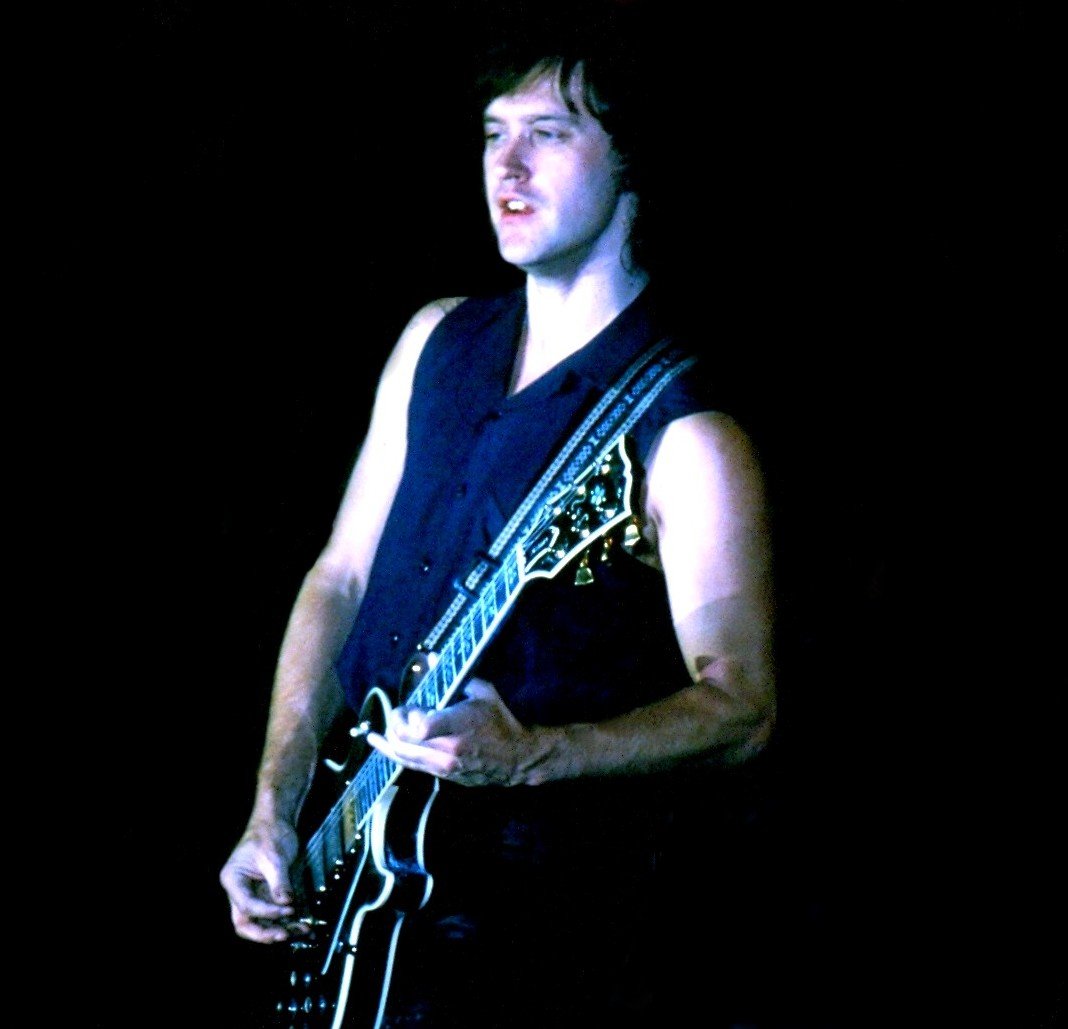
In 1964, 17-year-old guitarist Dave Davies was frustrated with the clean, polite sound of commercially available amplifiers. He took a single-edged razor blade and slashed the paper speaker cone of his tiny 6-watt Elpico amplifier ('The Little Green Amp') in radial cuts, poking knitting needles through the surround.
When he plugged in, the torn paper buzzed and flapped violently against the voice coil basket. Davies then plugged the speaker output of the distorted Elpico into the input of a 30-watt Vox AC30, creating the world's first cascading high-gain pre-amp rig.
Listen to Mark Knopfler's bare-finger picking on his 1961 Stratocaster (pickup selector in the out-of-phase bridge+middle position). The Fender Twin Reverb provides tremendous clean headroom, preserving every percussive thumb snap without clipping.
Notice the three-dimensional depth: a real mechanical dual-spring reverb tank driven by high-voltage valves washes behind the dry guitar signal, creating acoustic space without muddying the fast arpeggiated fills.
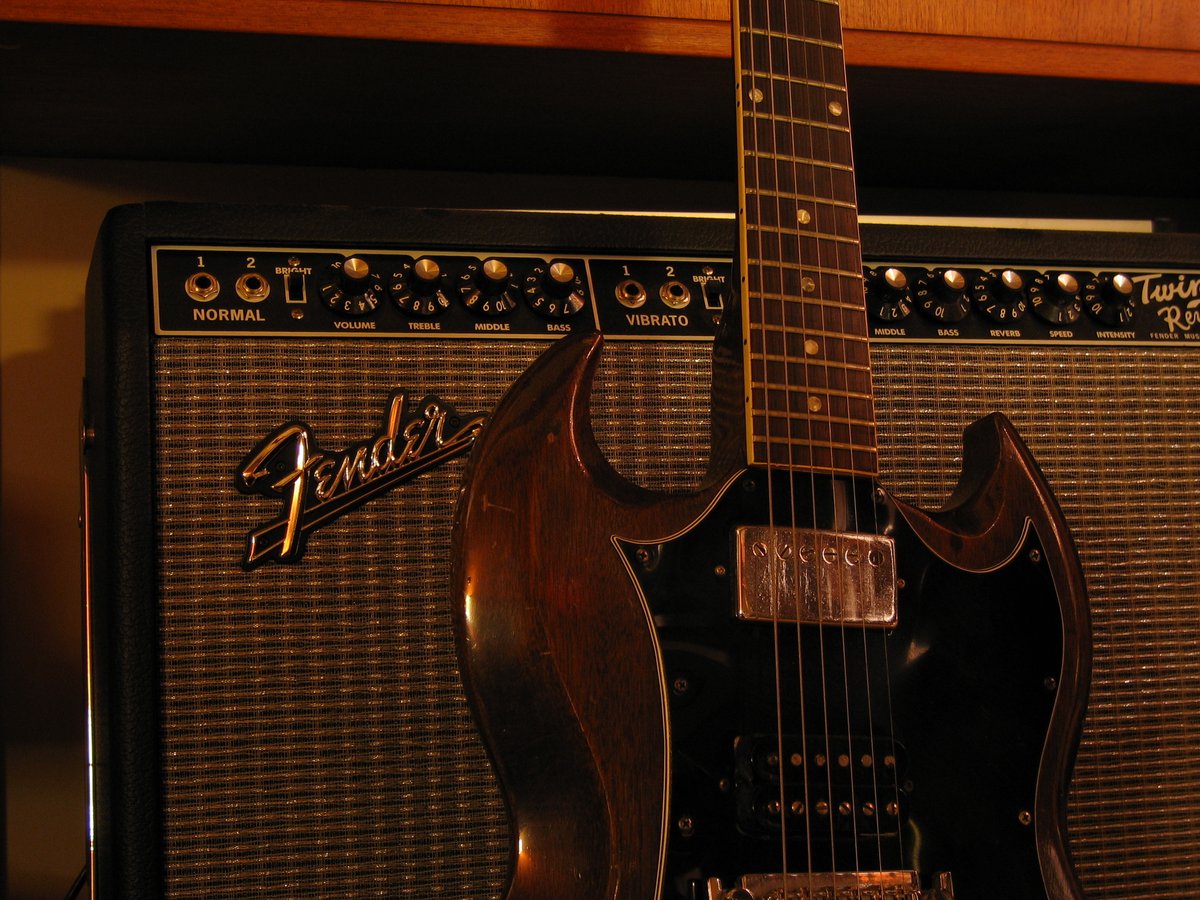
While British guitarists craved distortion and crunch, Leo Fender abhorred amplifier breakup. His design philosophy was absolute clarity, maximum volume, and pristine frequency reproduction for pedal steel and country players.
In 1963, Fender introduced the 'Blackface' circuit series, spearheaded by the Twin Reverb. Delivering 85 watts from four 6L6GC power tubes through twin 12-inch speakers, the Twin became the worldwide studio standard for clean guitar tracking.
This track from the famous 'Beano' album launched the British blues boom. Listen to Eric Clapton's 1960 Gibson Les Paul Standard plugged straight into a cranked Marshall Model 1962 'Bluesbreaker' combo.
Hear the creamy, singing sustain and rich second-order harmonic overtones. When Clapton digs in with heavy vibrato, the amplifier compresses smoothly, blooming into harmonic feedback without harsh high-frequency fizz.
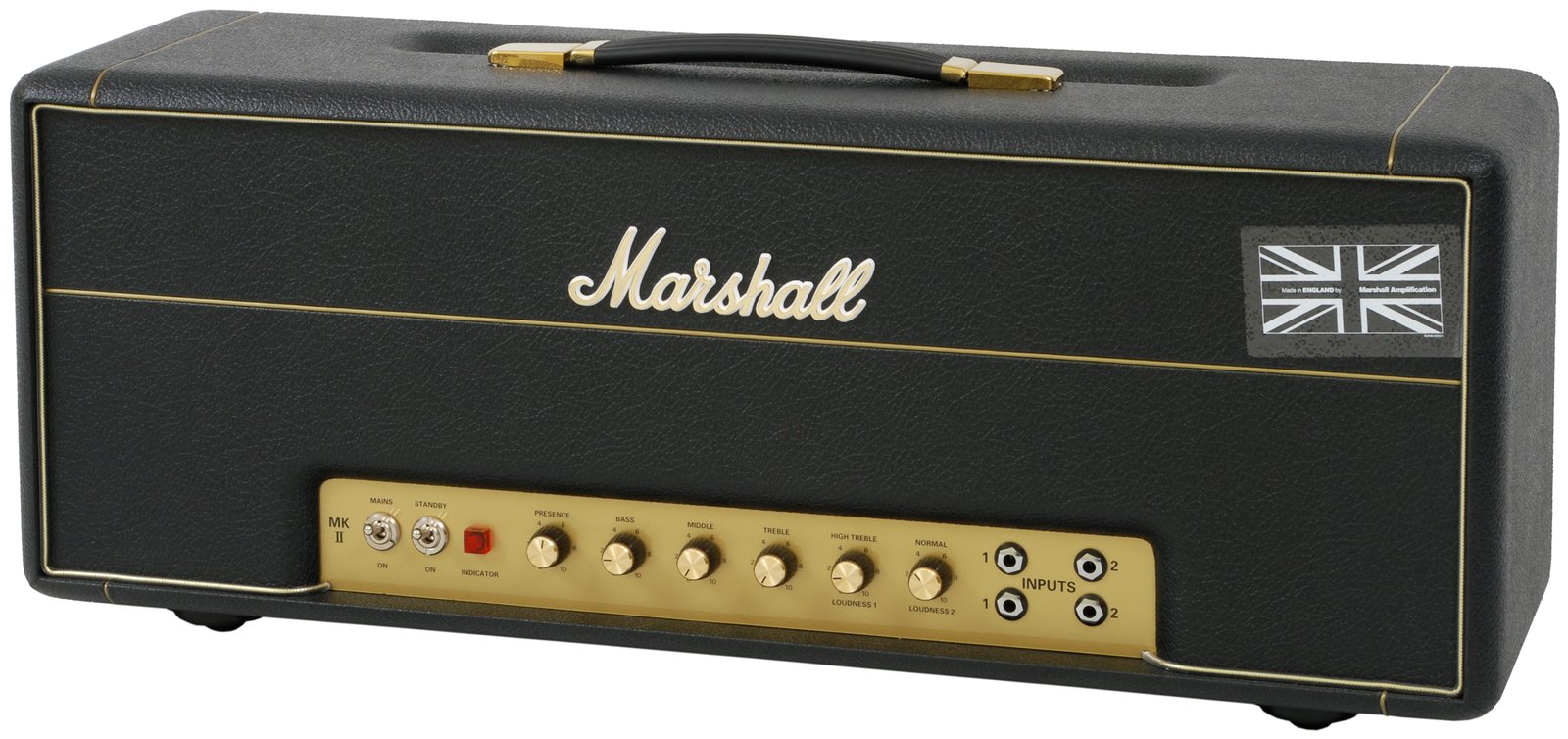
In 1962, London drummer Jim Marshall ran a music shop in Hanwell. Young guitarists including Pete Townshend and Ritchie Blackmore complained that American Fender amps were too expensive and didn't distort warmly enough.
Marshall hired technician Ken Bran and Dudley Craven to modify the Fender 5F6-A circuit using readily available British parts: Radiospares transformers, KT66 beam power valves, and Celestion 12-inch speakers. The result was the JTM45—darker, punchier, and far more prone to rich musical overdrive.
Listen to how Hendrix manipulates the immense acoustic pressure of his 100-watt Marshall Super Lead Plexi stacks. Standing in front of eight 12-inch Celestion speakers creates a closed acoustic feedback loop between the strings and the magnetic pickup coils.
Notice the explosive low-end punch on muted string thumps. The 100-watt EL34 power section compresses pick transients with ferocious authority, allowing the Vox wah-wah pedal sweep to scream with singing overtone harmonics.
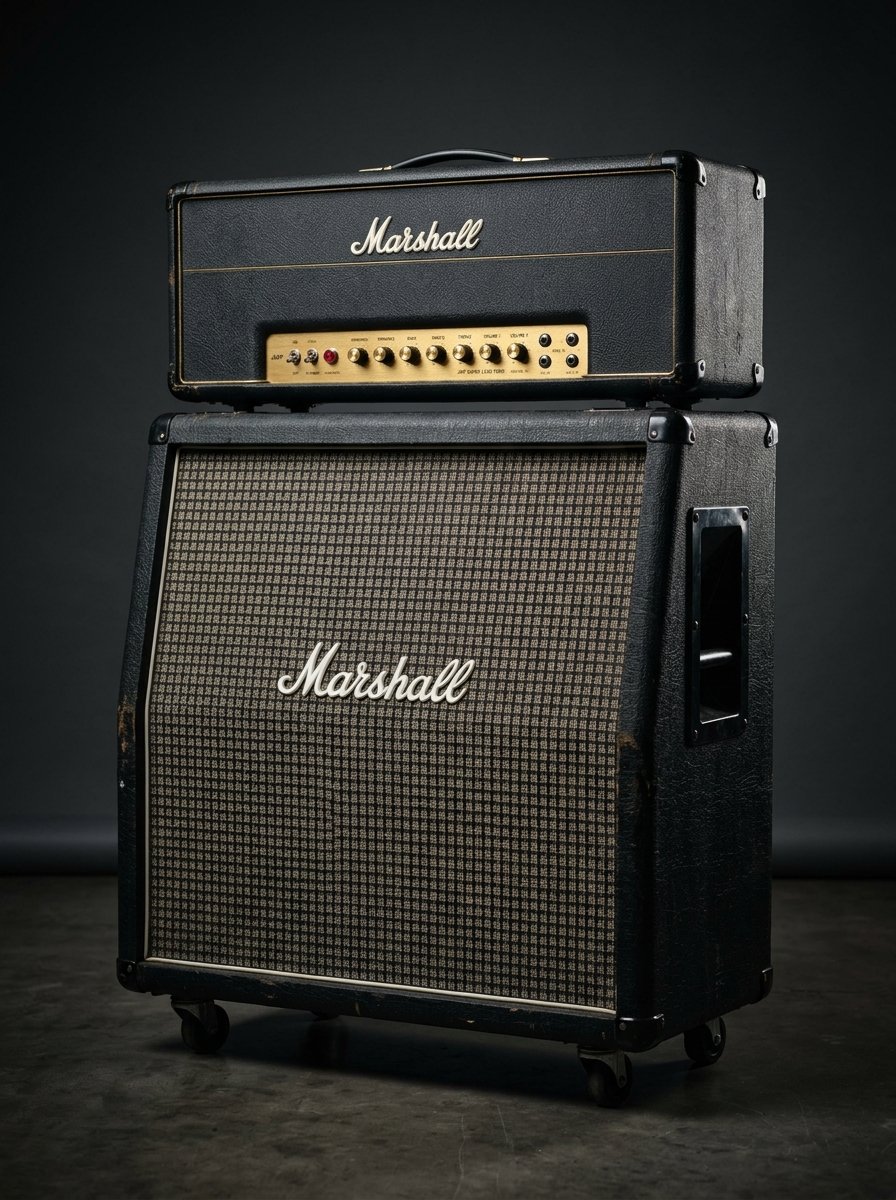
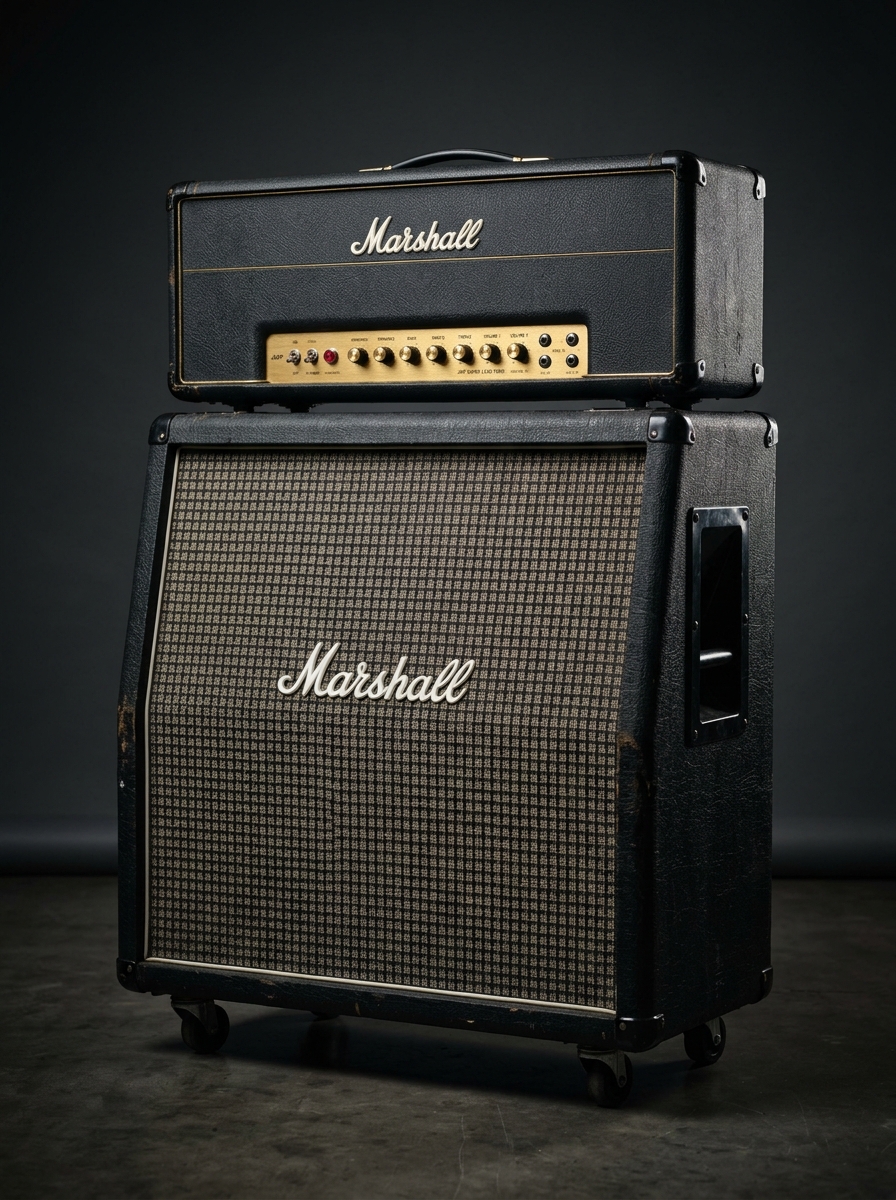
In 1965, Pete Townshend of The Who told Jim Marshall: 'I want an amp that's like a weapon.' He demanded an 8x12 cabinet. When roadies complained that the 8x12 was physically impossible to lift into tour vans, Jim Marshall cut the cabinet in half, creating the iconic angled-front 1960A top cabinet and straight 1960B bottom cabinet.
When Jimi Hendrix arrived in London in 1966, the first thing he demanded was to meet Jim Marshall. Hendrix chained multiple 100-watt Super Lead 'Plexi' heads together, establishing the visual and acoustic totem of stadium rock.
Listen to John Entwistle's ('The Ox') revolutionary bass tone. In an era where most bassists were relegated to polite low-end thud, Entwistle's Ampeg SVT delivers a ferocious full-frequency roar from deep 40 Hz sub-bass up to 4 kHz trebly pick clack.
Even beneath Keith Moon's chaotic cymbal crashes and Pete Townshend's sweeping synthesizer sequences, the Ampeg SVT's 300 watts of tube power maintain unrelenting transient punch with zero low-end flub or muddy frequency masking.
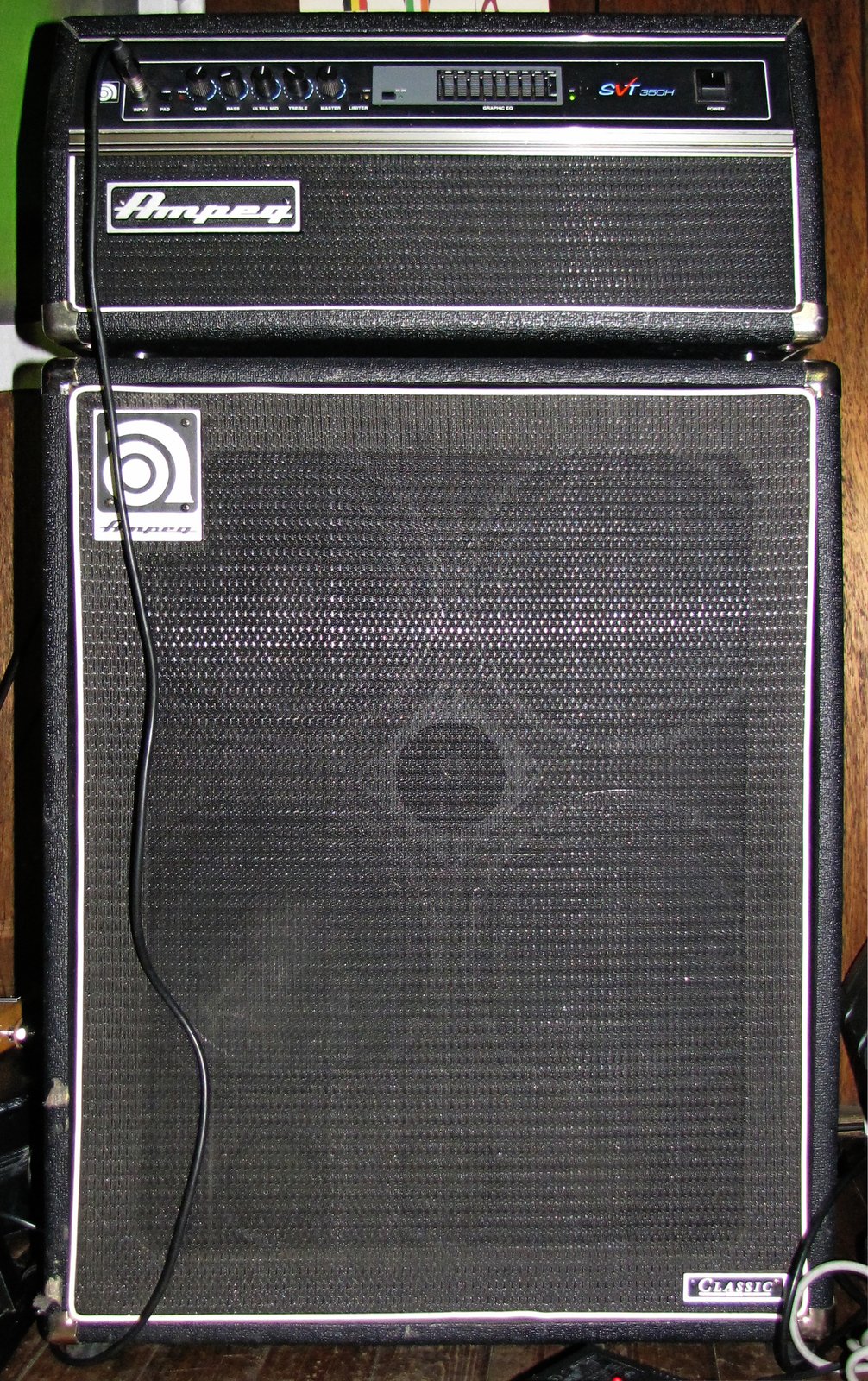
During rehearsals for the Rolling Stones' landmark 1969 American tour, their UK equipment failed to clear customs. Tour manager Chip Monck contacted Ampeg, who had just built prototype 300-watt bass amplifiers designed by Bill Hughes and Roger Cox.
Ampeg sent the prototypes on tour with Keith Richards and Bill Wyman. The earth-shaking reliability and immense headroom of the SVT ('Super Valve Technology') immediately made it the undisputed gold standard for rock, funk, and metal bass rigs worldwide.
Listen to the opening rhythm guitar chords of Malcolm Young (Gretsch) and Angus Young (Gibson SG) through Marshall JCM800 / Super Lead heads. Notice how dry, punchy, and articulate the distortion is.
Even with heavy valve saturation, you can clearly hear each individual string vibrating inside open A and D chords. Producer Mutt Lange's production showcases the aggressive upper-mid bite (1.5 kHz – 3 kHz) that makes the JCM800 cut through modern rock mixes.
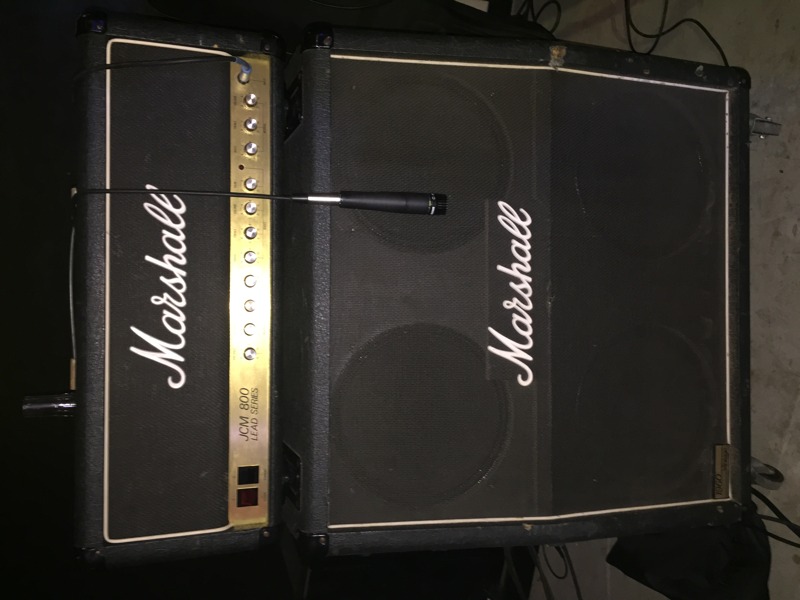
In the 1960s, guitarists had to play at deafening stadium levels to push non-master volume amps into distortion. By the late 1970s, clubs and studio engineers demanded lower stage volumes, leading Marshall to introduce the Model 2203 Master Volume circuit.
In 1981, Jim Marshall repackaged this circuit with bold modern cosmetics and his own initials/licence plate ('JCM800'). It became the defining voice of the 1980s: powering AC/DC, Iron Maiden, Judas Priest, Guns N' Roses, Slayer, and Metallica.
Listen to Andy Summers' iconic palm-muted ninth-chord arpeggios. Recorded with a 1961 Telecaster through a Roland JC-120, the sound has zero valve saturation or grit—it is mathematically clean, linear, and three-dimensional.
Hear the subtle acoustic swirling motion in the stereo spectrum. Because the JC-120 splits the dry signal to one speaker and pitch-vibrato to the other, the chorus effect is created organically in the air between the speakers rather than electronically summed.
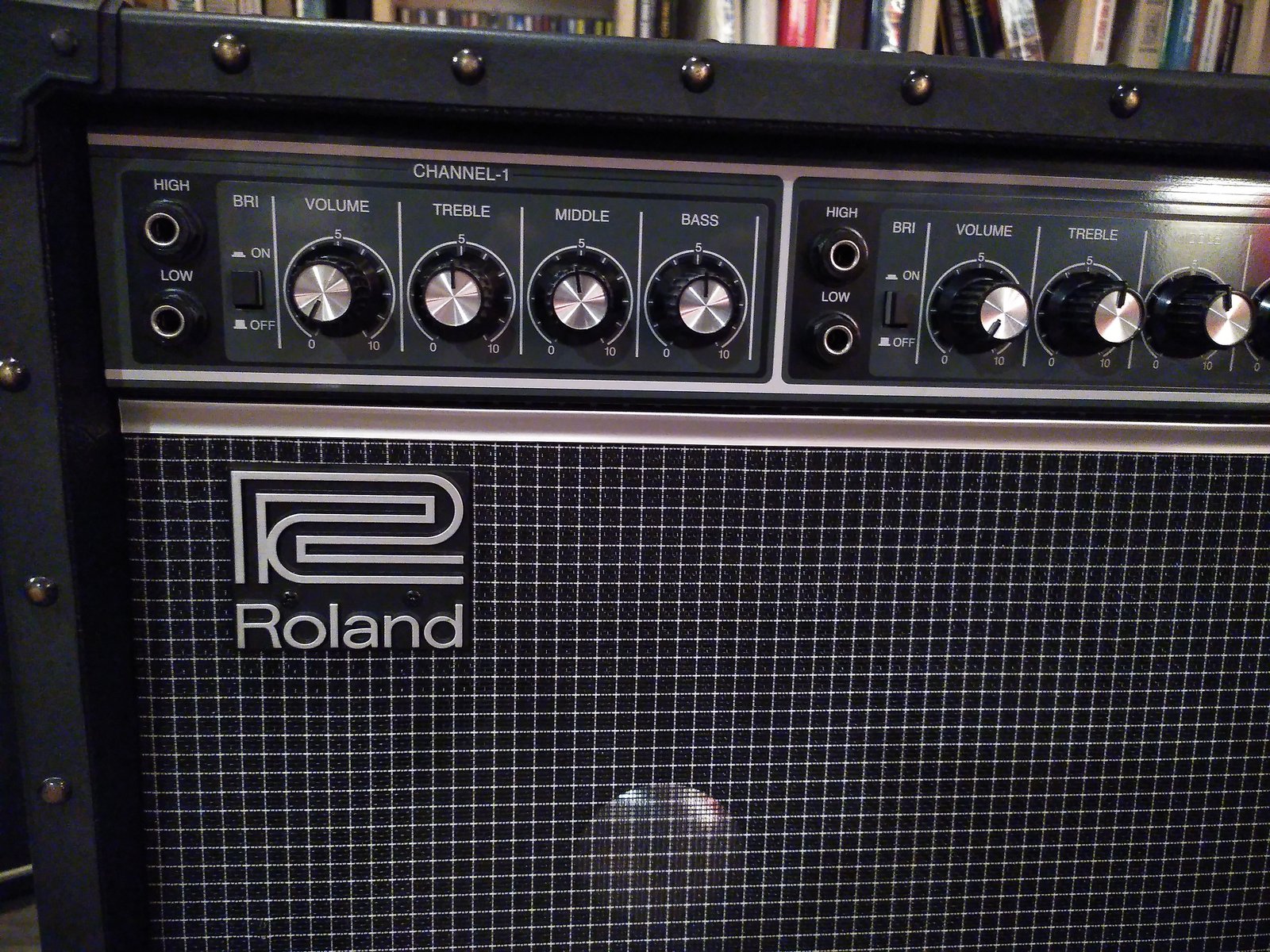
In 1975, newly founded Roland Corporation in Japan set out to build an ultra-reliable, road-worthy amplifier that completely bypassed the fragility, heat, and maintenance of vacuum tubes. The result was the Jazz Chorus JC-120.
Equipped with the world's first built-in Bucket Brigade Device (BBD) chorus effect, the JC-120 became the weapon of choice for post-punk, new wave, and pop guitarists (The Cure, The Police, Talking Heads) and the clean intro tone for thrash metal legends like Metallica.
Producer Bob Rock layered multiple passes of James Hetfield's rhythm guitar using a combination of Mesa/Boogie heads and Marshall power sections. Listen to the brutal low-end impact on the palm-muted E-string chugs.
Notice how the tone possesses immense sub-low authority (80 Hz – 120 Hz) combined with scooped lower-mids (500 Hz cut) and sizzling high-gain harmonic distortion. The notes punch like a sledgehammer without losing definition.
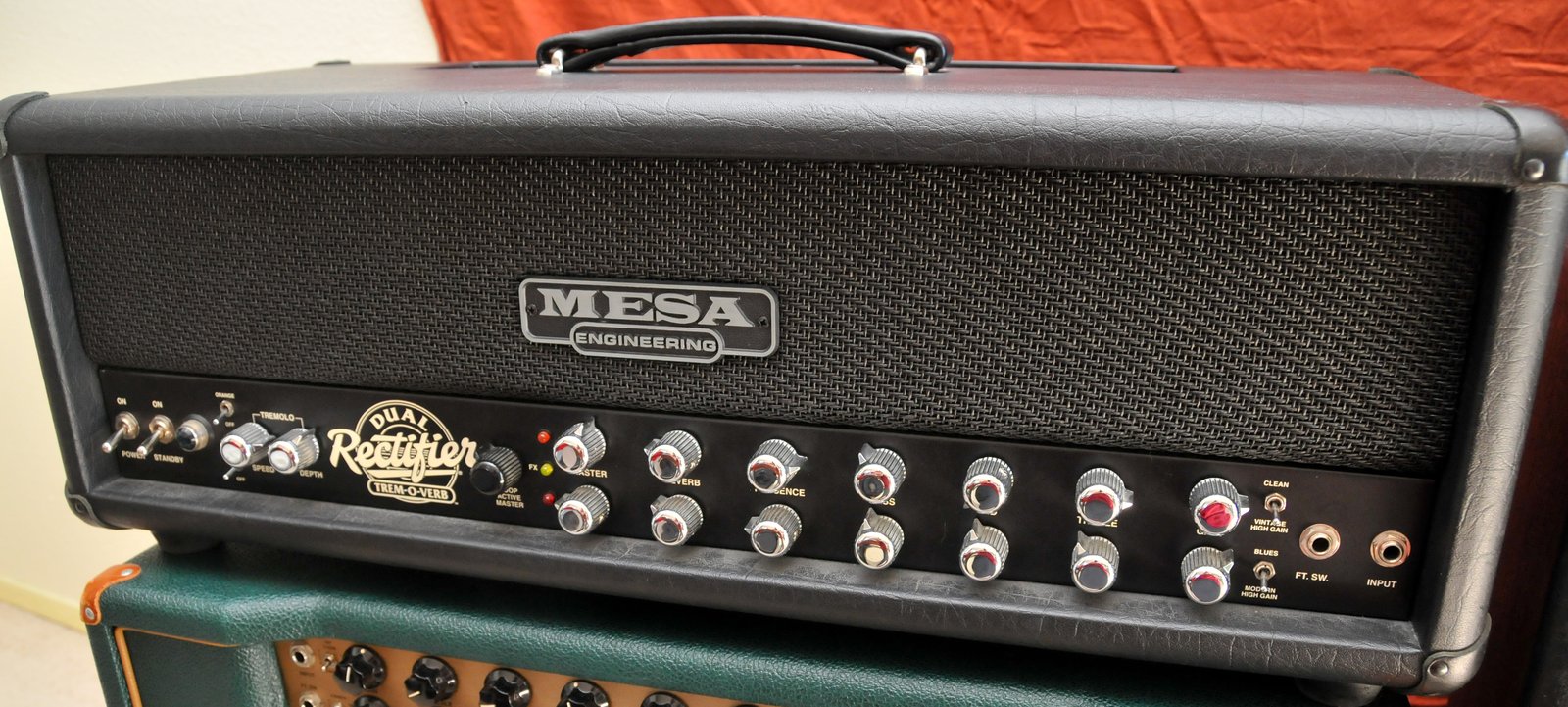
In the late 1960s, Randall Smith began modifying small Fender Princeton combos in his California repair shop, squeezing 100-watt circuits and extra gain stages into tiny cabinets (famously eliciting Carlos Santana to exclaim, 'Man, that little thing really boogies!').
In 1992, Mesa/Boogie released the Dual Rectifier. Designed specifically to compete with modern high-output pickups and 7-string guitars, its crushing low-end response defined the sound of 90s alternative rock, nu-metal, and modern metalcore.
Listen to Tosin Abasi and Javier Reyes performing lightning-fast thumping, slaps, and arpeggios on extended-range 8-string guitars. Traditional tube amplifier stacks often collapse into muddy sub-bass mush when handling low B (61 Hz) or low F# (46 Hz).
Using digital modellers running direct to the PA, every complex polyrhythmic transient remains surgically sharp. The absence of vibrating speaker cabinets on stage completely eliminates acoustic bleed into drum and vocal microphones.
In 1998, Line 6 launched the POD—the iconic red 'kidney bean' desktop unit that used numerical DSP algorithms to simulate classic Fender, Marshall, and Vox circuits. For the first time, guitarists could record album-quality guitar tones directly into home studio DAWs late at night.
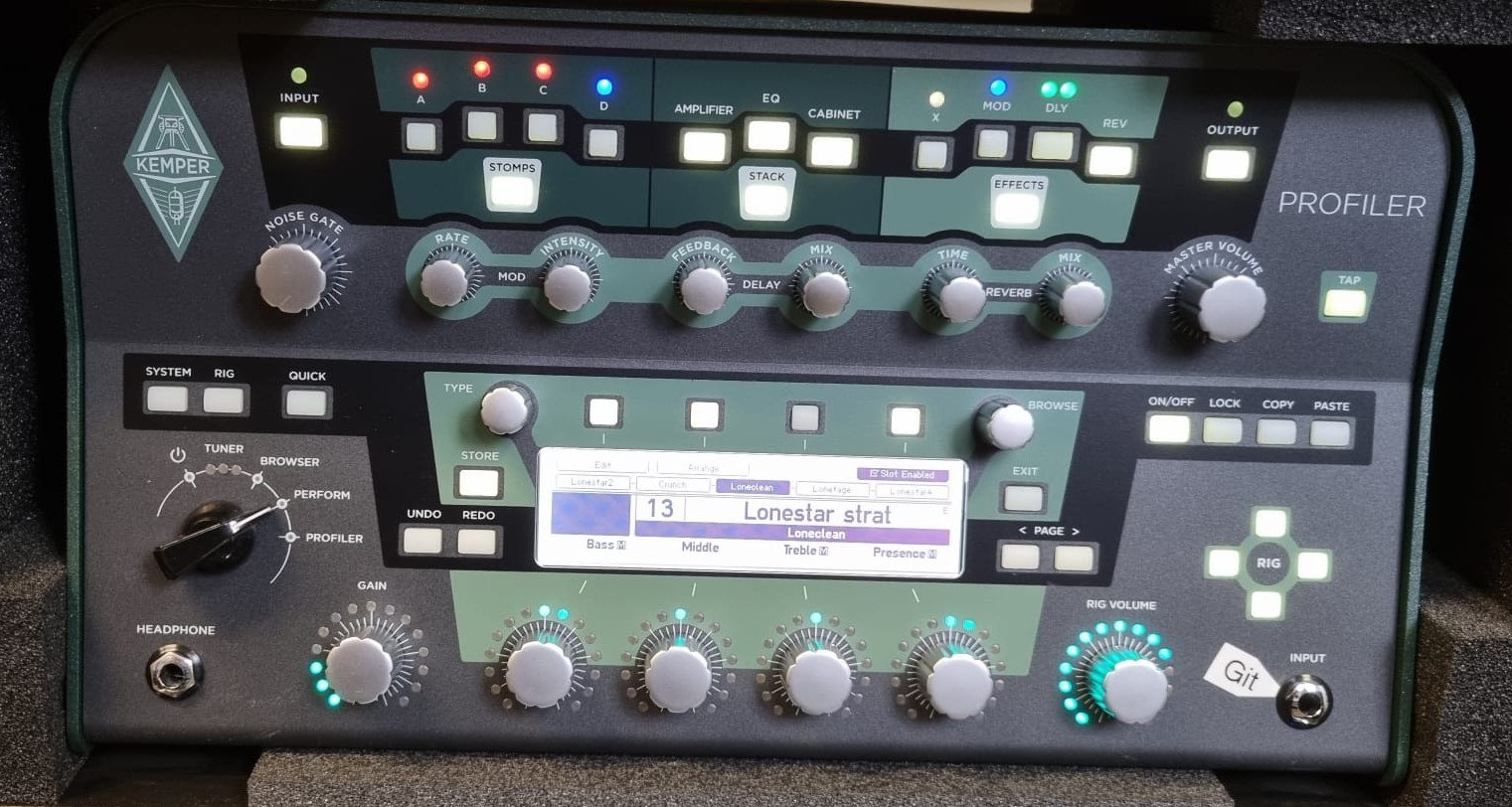
In 2011, Christoph Kemper introduced the Kemper Profiling Amplifier, which sent test tones through a physical tube amp and analyzed the distortion/frequency transfer function. Today, Neural DSP and Fractal Audio use advanced machine learning and convolution IRs, making digital modeling indistinguishable from real valves in blind ABX listening tests.
Stevie Ray Vaughan demonstrates why tube amplifiers remain revered: playing with a light thumb produces a sparkling, chimey clean tone, while digging in with a heavy pick attack instantly forces the power tubes into singing, compressed overdrive without touching a volume knob.
Notice how the close-mic placement captures the high-frequency snap of the pick transient while the closed-back speaker cabinet delivers punchy low-end impact. This is the master reference for evaluating amplifier dynamics in the Component 3 exam.
In the Edexcel Component 3 examination, questions frequently target: (1) Valve amplifier signal path (Preamp vs Power Amp vs Output Transformer), (2) Valve types and harmonic character (Even-order warmth vs Solid-State Odd-order harshness), and (3) Microphone placement geography on the speaker cone.
Moving a dynamic microphone (like a Shure SM57) from the center of the speaker cone towards the edge progressively rolls off high frequencies, taming harsh treble. Pointing on-axis maximizes high-frequency transient bite; angling 45 degrees off-axis smooths out upper-mid harshness.
| Amp Family | Valves • Power | Speakers • Cabinet | Sonic Character • Exam Focus |
|---|---|---|---|
| Fender Bassman / Twin | 6L6 / 6V6 (Fixed/Cathode Bias) | 4x10 Jensen / 2x12 Oxford in Open-Back Pine Cabinet | High headroom, scooped lower-mids, sparkling highs, tube spring reverb & optical tremolo. |
| Vox AC30 Top Boost | 4x EL84 (Class A Cathode Bias) | 2x12 Celestion Alnico Blue in Open-Back Birch Cabinet | Class A warmth, chimey 2-4 kHz upper midrange bite, rapid dynamic compression, no negative feedback. |
| Marshall Plexi / JCM800 | EL34 / KT66 (Push-Pull AB) | 4x12 Celestion Greenback/G12T-75 in Closed-Back Birch Ply Stack | Aggressive upper-mid crunch, tight low end, stadium acoustic projection, cascading high-gain preamp. |
| Ampeg SVT Bass Rig | Six 6146B / 6550 Tubes (300W) | 8x10 Sealed Acoustic Suspension Cabinet ('The Fridge') | 300W RMS all-tube headroom, massive low-end punch without flub, inductor-based midrange sweep EQ. |
| Roland JC-120 | Bipolar Solid-State (2x 60W) | 2x12 Heavy-Duty Drivers in Open-Back Road Enclosure | Zero valve distortion, infinite clean headroom, built-in analog BBD spatial stereo chorus in physical air. |
| Mesa/Boogie Dual Rectifier | Quad 6L6/EL34 + 5U4G/Diodes | 4x12 Celestion Vintage 30 Closed-Back Enclosure | Modern multi-channel high gain, switchable tube sag vs diode punch, scooped mids, tight percussive chug. |
| Digital DSP Modellers | SHARC DSP / Machine Learning | Impulse Response (IR) Convolution / Direct XLR to FOH | Exact mathematical circuit profiling, zero stage volume or bleed, micro-level speaker IR emulation. |