The Electric Guitar: Component 3 Syllabus Matrix

Solidbody Genesis
The transition from big band acoustic archtops prone to acoustic feedback to solid ash and alder bodies: the 1950 Broadcaster/Telecaster and 1954 Stratocaster.
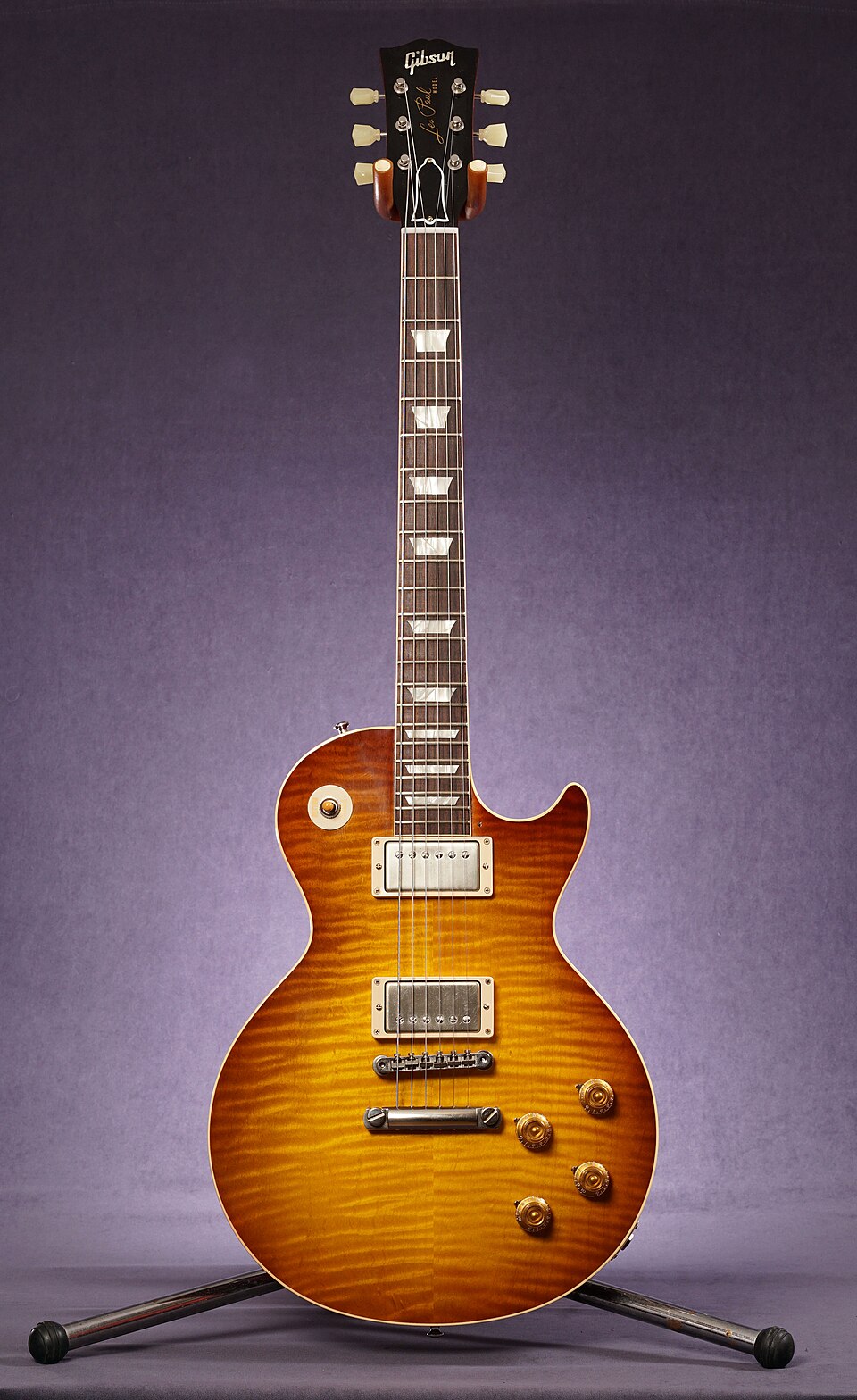
Transducers & Hum Cancellation
Electromagnetic transducers convert steel string vibration into AC audio. Seth Lover's 1957 Gibson PAF humbucker used reverse-wound dual coils to cancel 50/60 Hz mains hum.
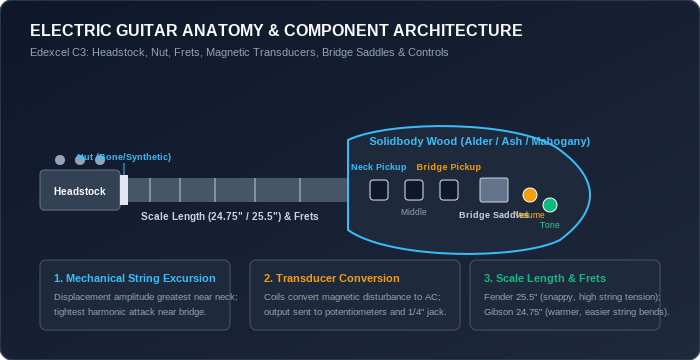
Anatomy & Signal Routing
String gauge and tension, nut and saddle anchor points, magnetic pole piece spacing, potentiometer loading (250k vs 500k), and tone capacitors form a complex RLC circuit.
Electric Guitar Anatomy: Signal Architecture
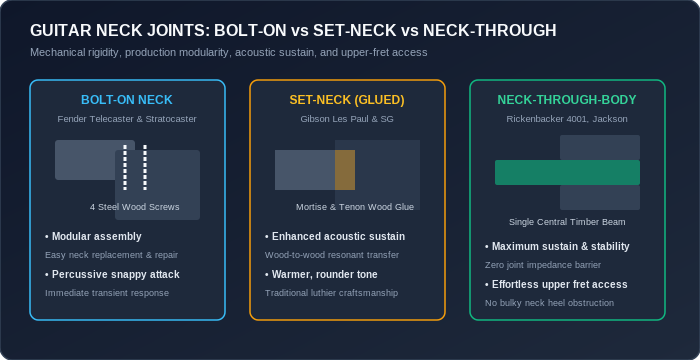
Neck Joints & Sustain
Bolt-on (Fender): Snappy attack, modular repair. Set-neck (Gibson): Warm acoustic transfer and singing sustain. Neck-through: Maximum rigidity and uninterrupted sustain across the instrument body.
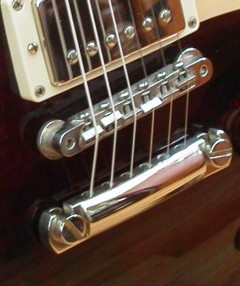
Bridges & Intonation
Individual bridge saddles allow precise intonation compensation (string length adjustment for string core stiffness), while zinc or brass stopbar tailpieces anchor string vibrations into the mahogany wood body.
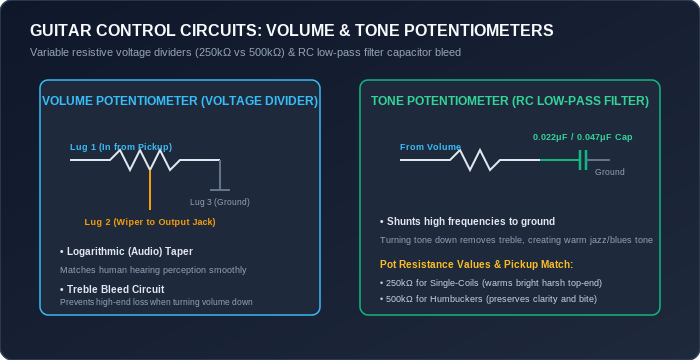
Passive Tone Circuits (RC Filter)
Variable resistors (potentiometers) paired with capacitors (0.022–0.047 µF) bleed high frequencies to ground. A 250 kΩ pot damps treble for bright single-coils; a 500 kΩ pot prevents humbuckers from sounding muddy.
Electromagnetic Induction: Faraday's Law
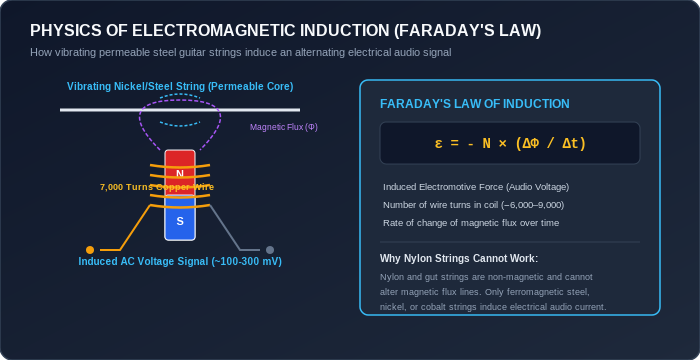
Faraday's Law of Induction
A permanent magnet creates a magnetic flux field (Φ). When a ferromagnetic steel or nickel string vibrates, it disturbs this field, inducing an electrical voltage ($\varepsilon = -N \frac{\Delta\Phi}{\Delta t}$) across the coil.
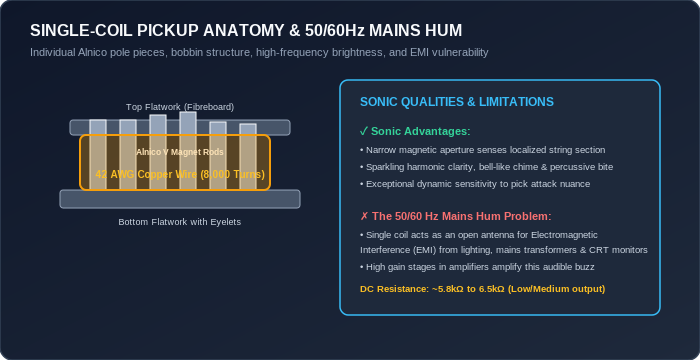
Single-Coil Construction
Consists of 6 cylindrical Alnico magnet pole pieces wrapped in approximately 7,000–8,500 turns of ultra-fine 42 AWG copper wire. Offers bright, articulate chime and snappy transient attack.
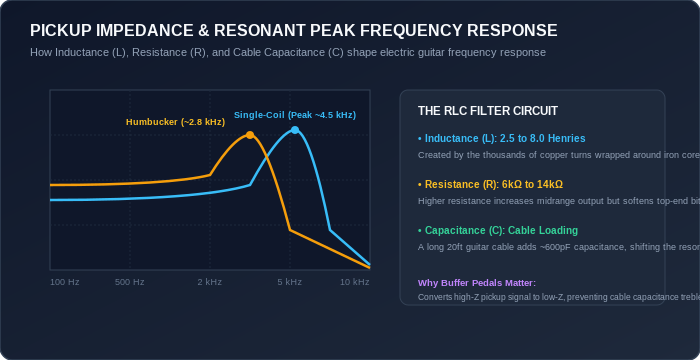
RLC Resonant Peak Physics
Inductance (2.5–4 H), DC resistance (5.8–6.5 kΩ), and cable capacitance form a resonant RLC low-pass filter, giving single-coils their characteristic 4–5 kHz bell-like presence peak.
1920s–1930s: The Big Band Volume Dilemma
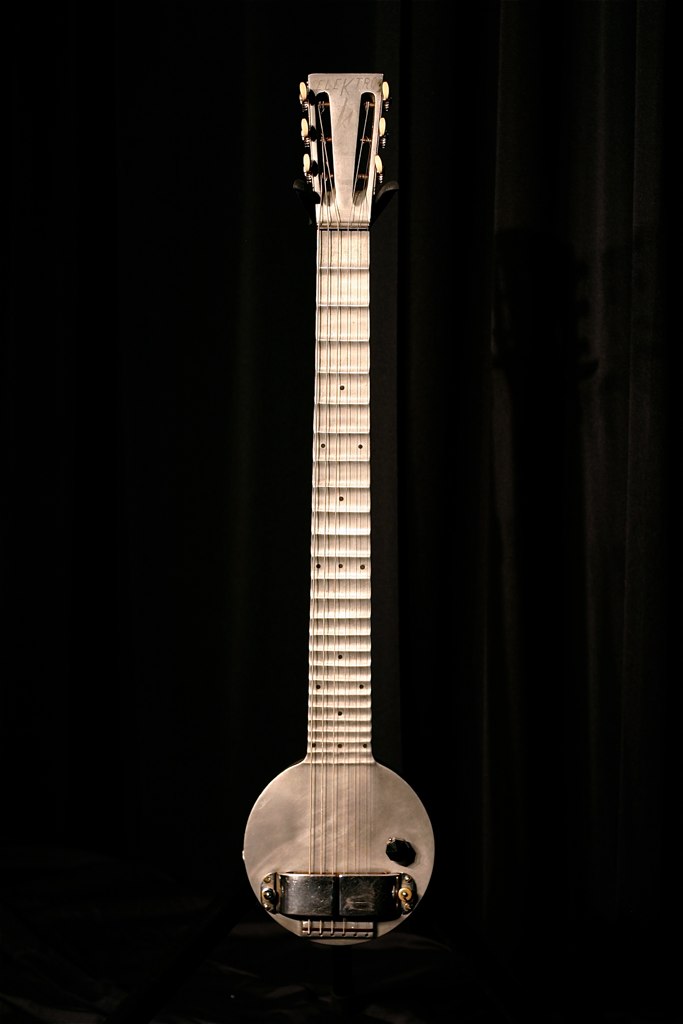
The Rickenbacker "Frying Pan" (1931)
George Beauchamp and Adolph Rickenbacker designed the first commercial electric guitar: a cast-aluminum lap steel featuring a horseshoe magnet pickup wrapping completely around the strings.
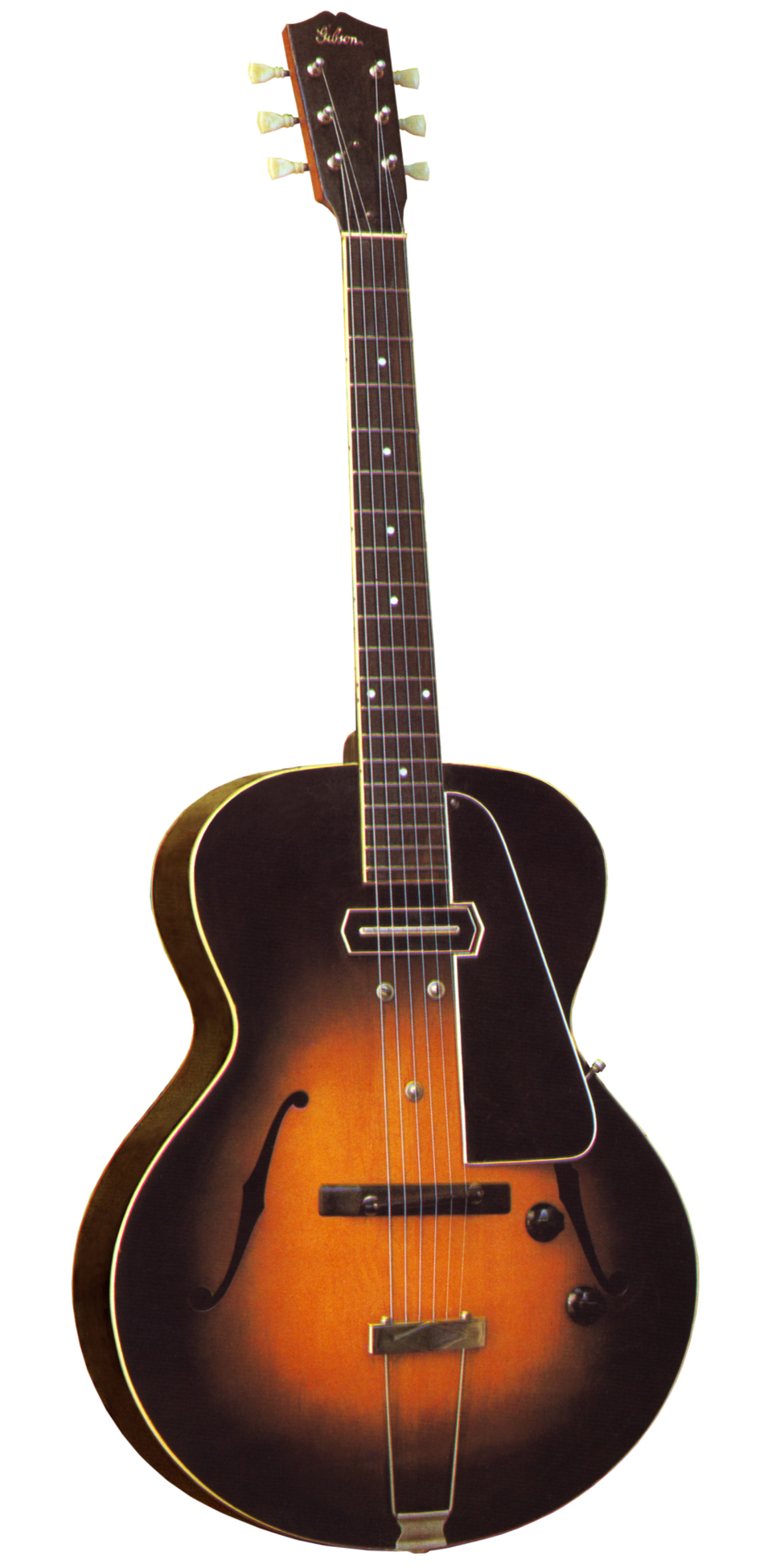
The Gibson ES-150 (1936)
Gibson's "Electric Spanish" archtop guitar featured a long cobalt steel blade pickup. Jazz pioneer Charlie Christian used it with the Benny Goodman Sextet to elevate the guitar into a major solo instrument.
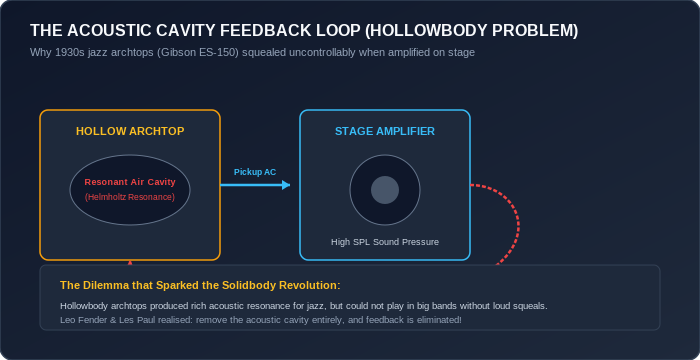
The Acoustic Feedback Crisis
Because hollowbody archtops possessed thin, flexible spruce soundboards, high stage volume from tube amplifiers caused acoustic air cavity resonance, triggering deafening feedback howling.
1940–1950: The Birth of the Solidbody
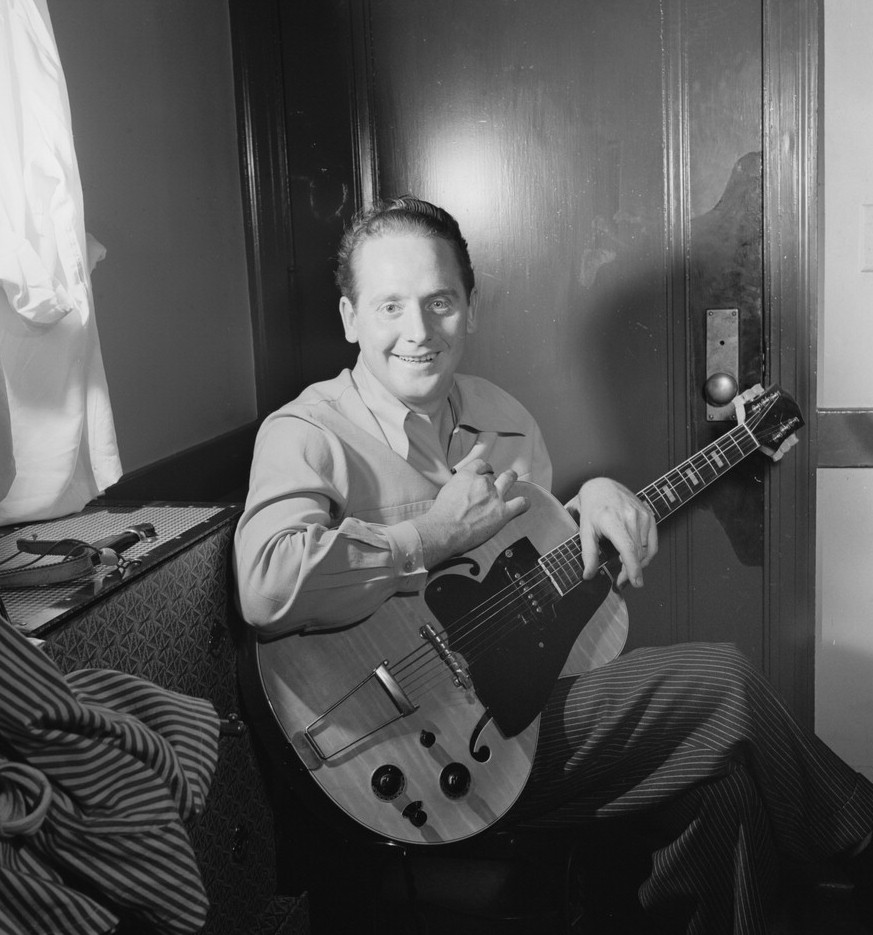
Les Paul's "The Log" (1940)
Guitarist Les Paul mounted a Gibson neck and handmade pickup onto a solid 4x4-inch pine timber block, gluing archtop wings to the sides for aesthetics. It proved solid wood eliminated acoustic feedback.
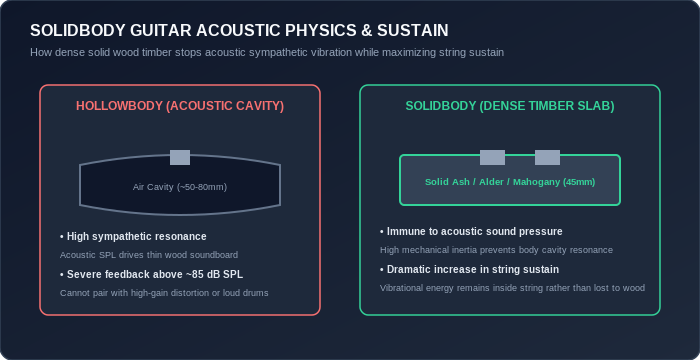
Feedback Decoupling Physics
By substituting high-density solid wood (ash, alder, mahogany) for a resonant hollow cavity, the body no longer acts as an acoustic soundboard, preventing loudspeaker vibrations from driving the top.
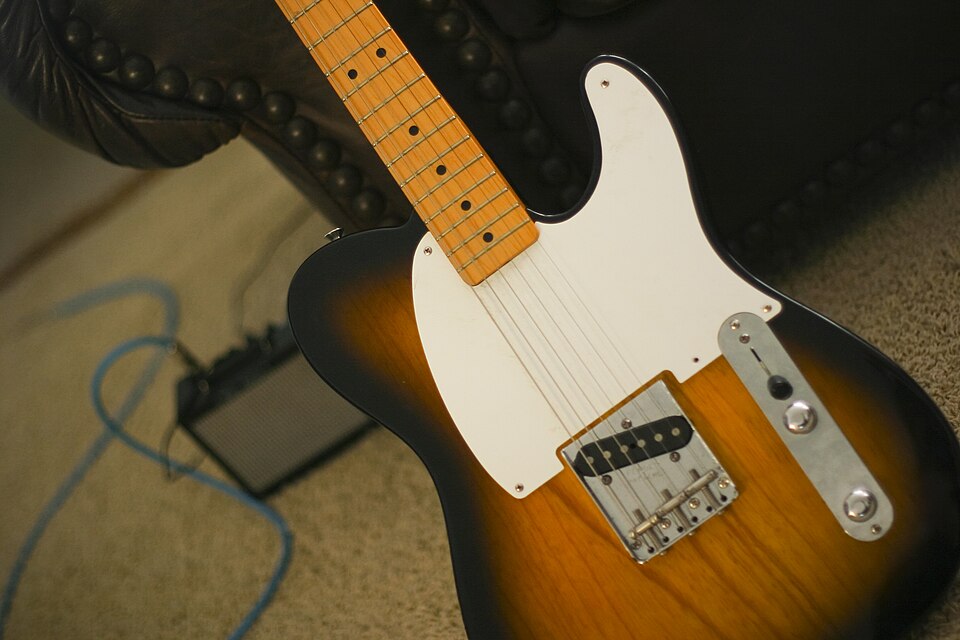
Fender Broadcaster (1950)
Leo Fender combined solid ash wood with modular bolt-on necks, creating the world's first commercially mass-produced solidbody electric guitar (renamed the Telecaster in 1951).
1951 Fender Telecaster: The Workhorse
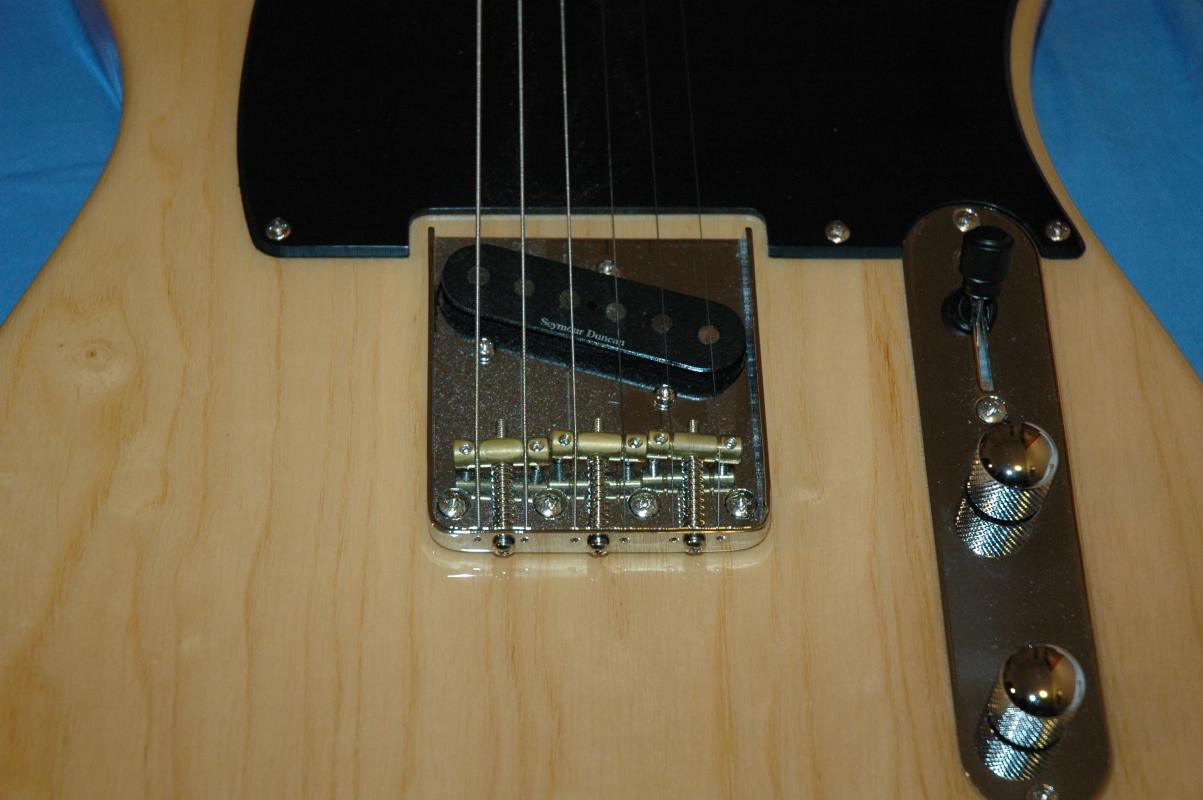
Steel Baseplate & "Twang"
The bridge pickup is mounted directly into a stamped steel bridge plate with copper-coated steel baseplate, focusing magnetic flux into a concentrated field for biting, cutting treble twang.
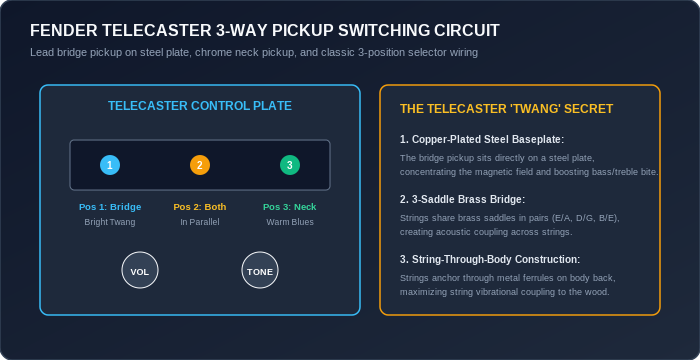
Pickup Pairings & Blend
Paired a warm, chrome-covered neck pickup (narrow bobbin) with the aggressive bridge pickup. The 3-way selector permitted distinct rhythm and biting lead timbres from a single instrument.
The Rock & Roll Sound
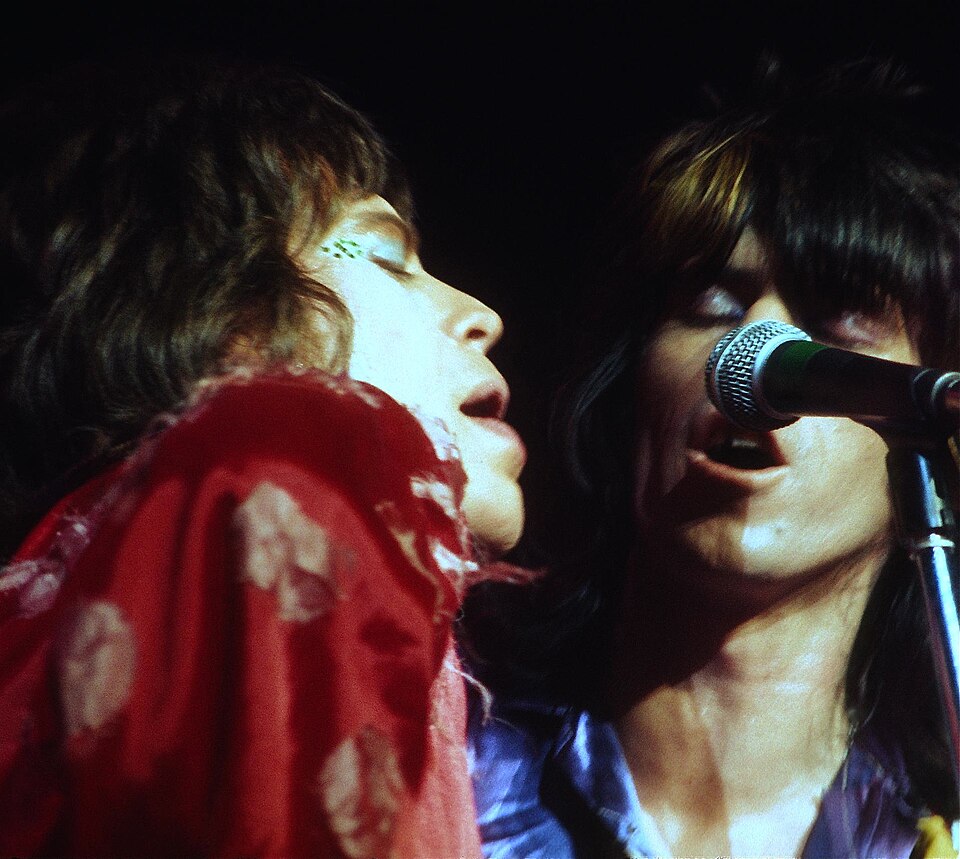
Heard on Muddy Waters blues tracks, Keith Richards' open-G Rolling Stones riffs (*Honky Tonk Women*), Bruce Springsteen, and Joe Strummer (*The Clash* punk rhythm tracks).
1952 Gibson Les Paul: Artisan Craftsmanship
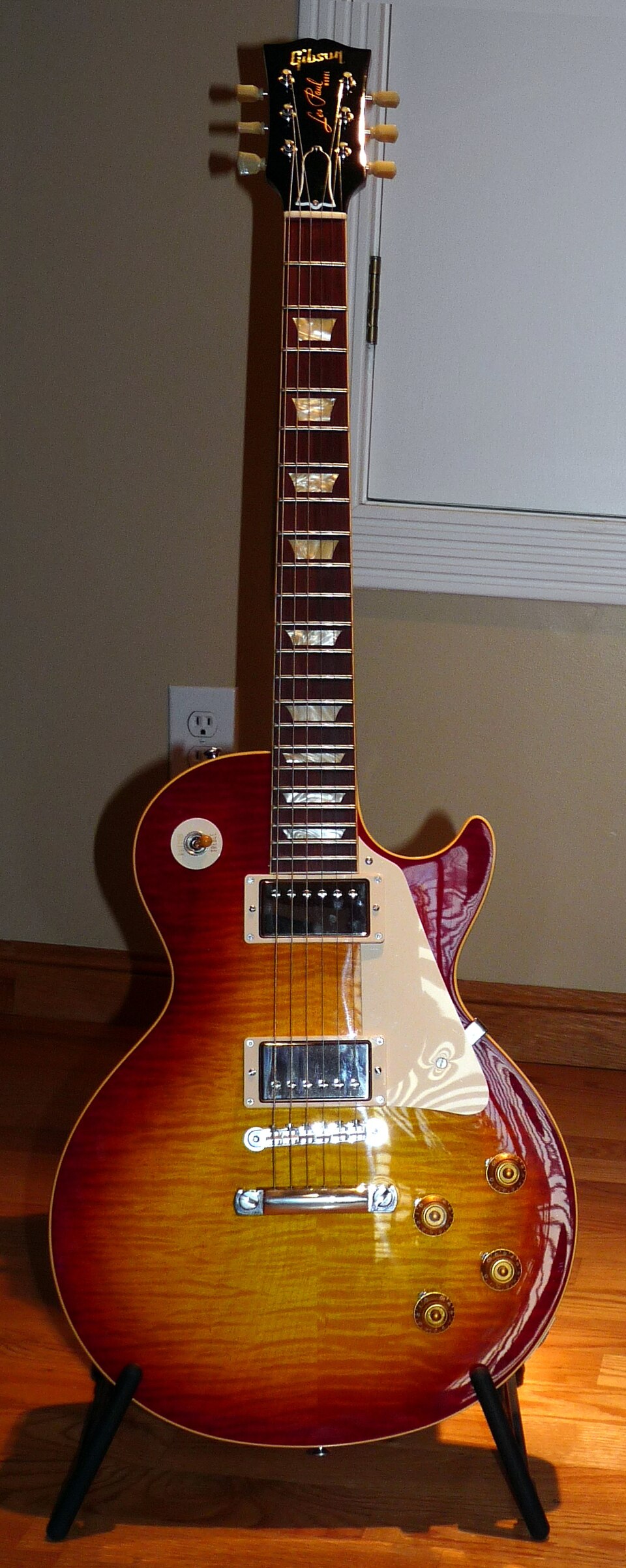
Mahogany Body & Carved Maple Top
Combined a dense, warm solid mahogany back with a hand-carved, dense bookmatched maple cap. Maple provided fast transient snap and high-end clarity, while mahogany delivered thick low-end sustain.
The P-90 "Soapbar" Pickup
Gibson's original 1952 pickup: wider, shorter bobbin than Fender coils with twin Alnico bar magnets underneath steel pole screws, producing a gritty, fat, high-output single-coil roar.
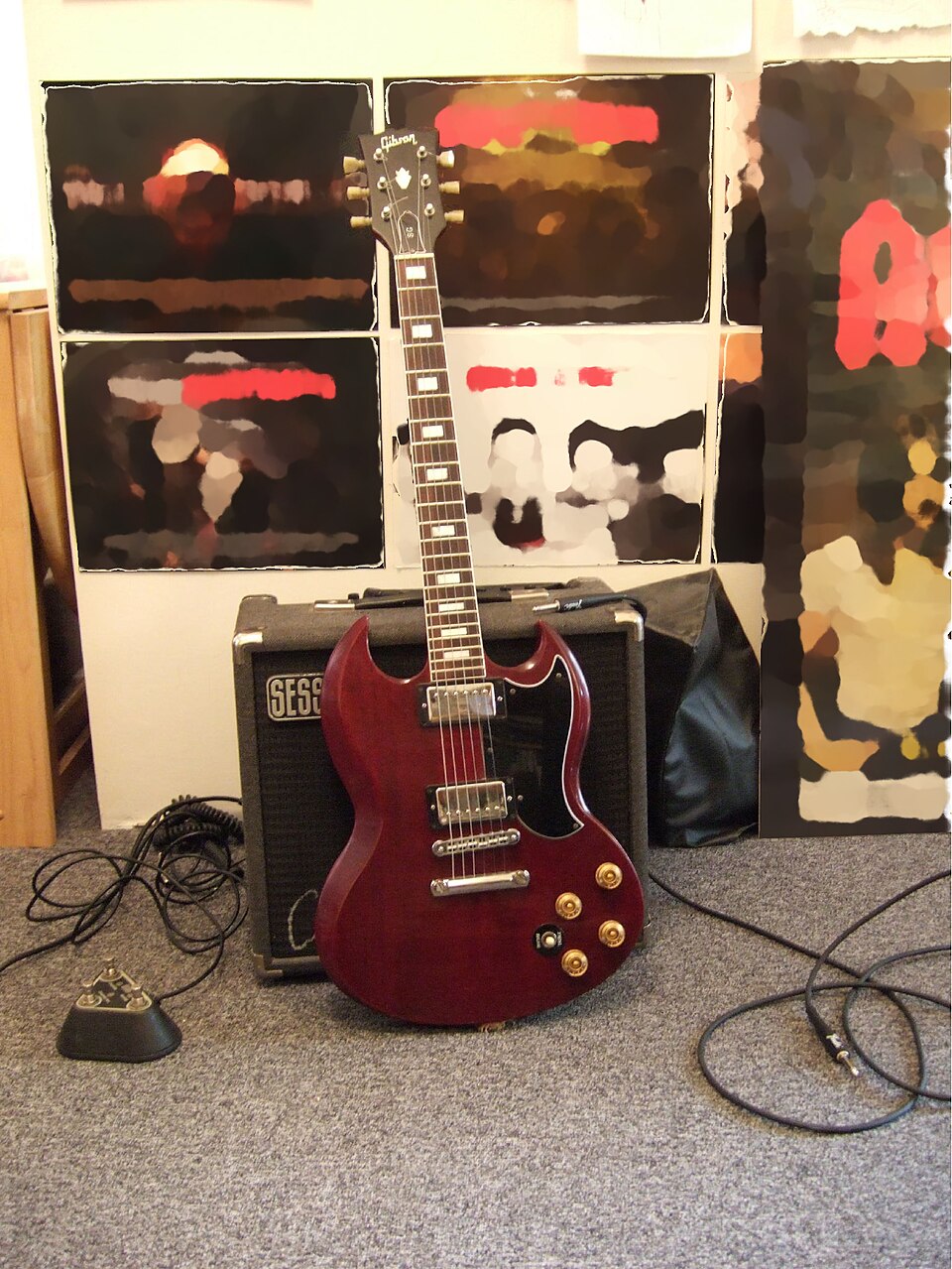
The Gibson SG Redesign (1961)
To reduce manufacturing weight and compete with the Stratocaster, Gibson released the double-cutaway "Solid Guitar" (SG) with thin mahogany body and unobstructed 22nd-fret neck access.
1954 Fender Stratocaster: Modern Ergonomics
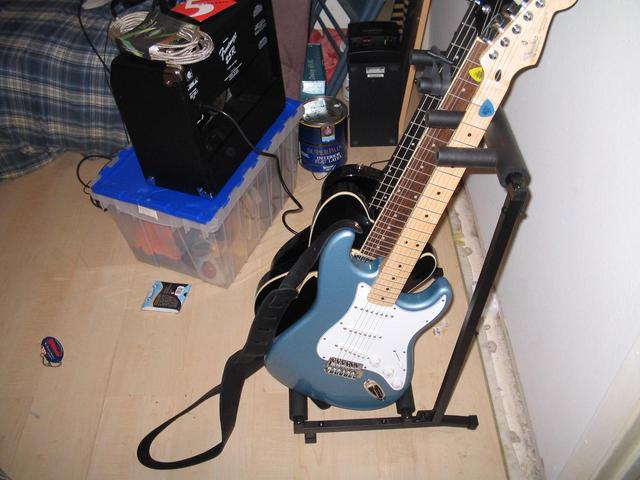
Contoured Comfort Body
Featured deep forearm and belly comfort bevels, asymmetrical double cutaways for access to upper frets, and 3 single-coil pickups arranged across neck, middle, and bridge positions.
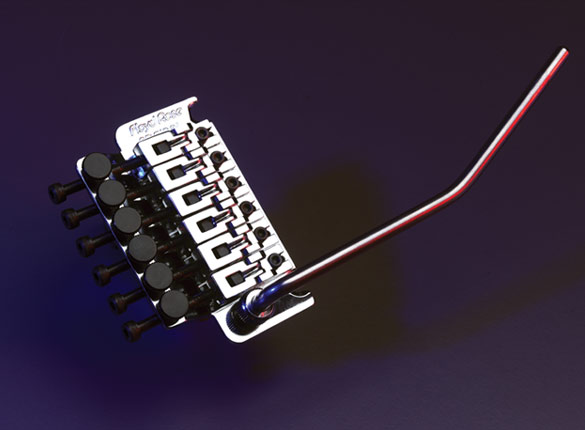
Synchronized Vibrato Bridge
Integrated a moving bridge plate with individual string saddles, a heavy steel inertia block, and rear counterbalance springs. Allowed smooth pitch drops and shimmer while maintaining pitch return.
Hendrix, Clapton & Gilmour
Hendrix (*Voodoo Child*, *Little Wing*), David Gilmour (*Comfortably Numb*), and Stevie Ray Vaughan used the Stratocaster's double cutaways, vibrato arm, and pickup selector to define modern guitar.
Seth Lover's Humbucker: Dual Coils & Phase Math
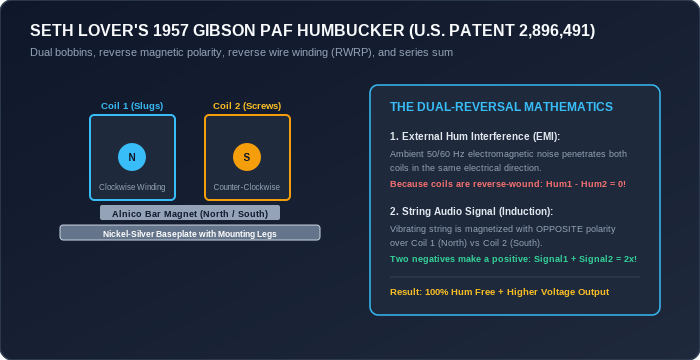
The Gibson PAF (1957)
Two side-by-side bobbins wired in series with opposite magnetic poles (North and South) and reverse wire winding (RWRP: Reverse Wound, Reverse Polarity) around a single Alnico bar magnet.
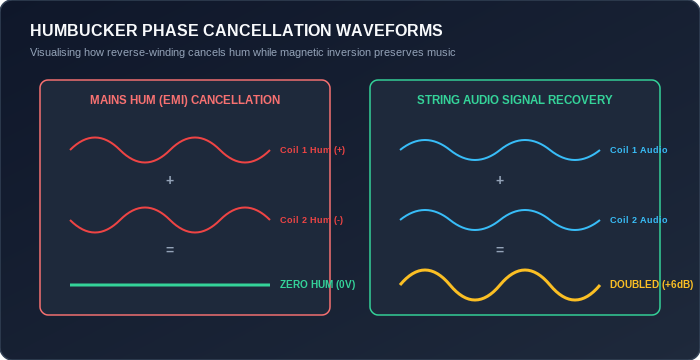
Phase Cancellation Mechanics
External 50/60 Hz EMI hits both coils with identical phase and is canceled: $\text{Hum}_1 - \text{Hum}_2 = 0$. Inverted string magnetic fields double audio voltage constructively: $\text{Sig}_1 + \text{Sig}_2 = 2\text{Sig}$.
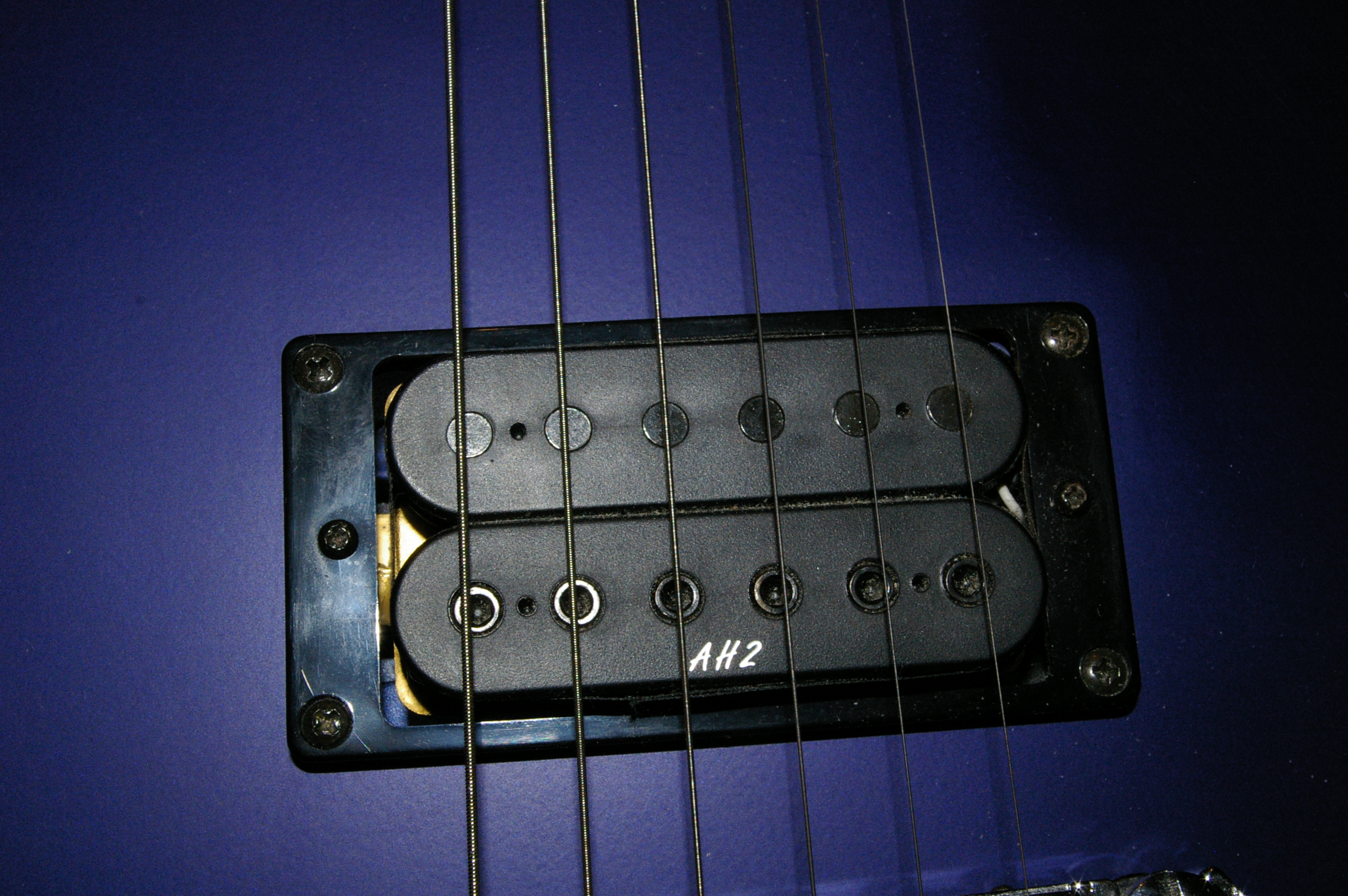
Higher Output & Midrange Punch
Series wiring doubles coil inductance and increases DC resistance to 7.5–9.0 kΩ. Shifts the resonant peak down to ~2.5–3 kHz, producing thick, creamy distortion in valve amplifiers.
Pickup Placement: Nodes, Antinodes & Spectrum
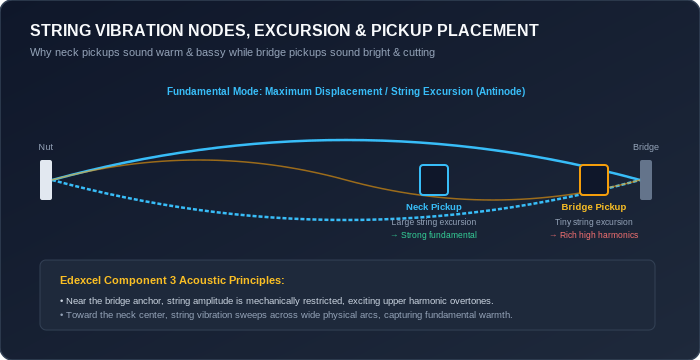
Vibration Nodes & Antinodes
Vibrating strings exhibit stationary nodes (zero excursion) and antinodes (maximum excursion). A pickup placed near an antinode detects that specific harmonic with maximum electrical amplitude.
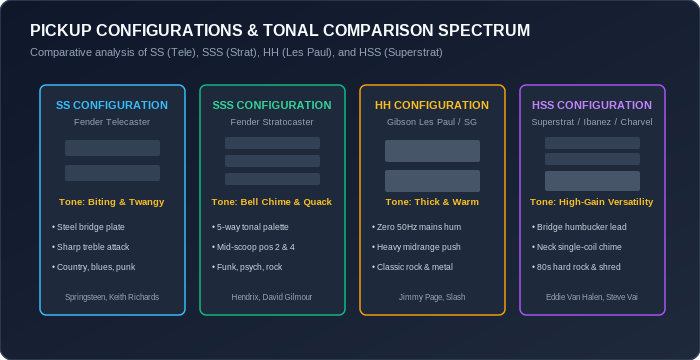
Bridge vs Neck Timbre
Bridge Pickup: Senses near fixed anchor: low fundamental excursion, dense high harmonics (bright, biting, sharp). Neck Pickup: Senses near string center: massive fundamental excursion (warm, round, full).
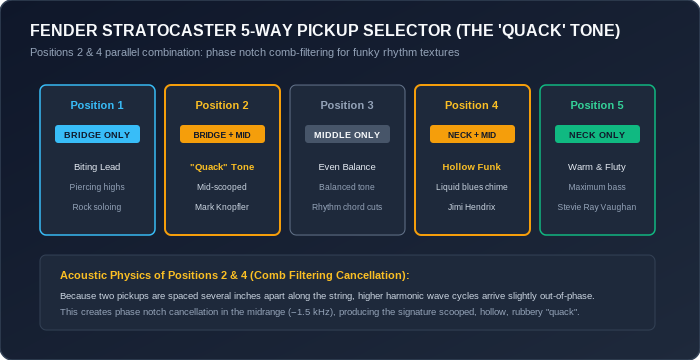
Strat Positions 2 & 4 Comb Filtering
Wiring adjacent pickups in parallel samples strings at two distinct points. Slight phase differences create comb-filter cancellation notches in the 1.5–2 kHz midrange, producing the hollow "quack" tone.
Semi-Hollow & 12-String: Studio Flexibility
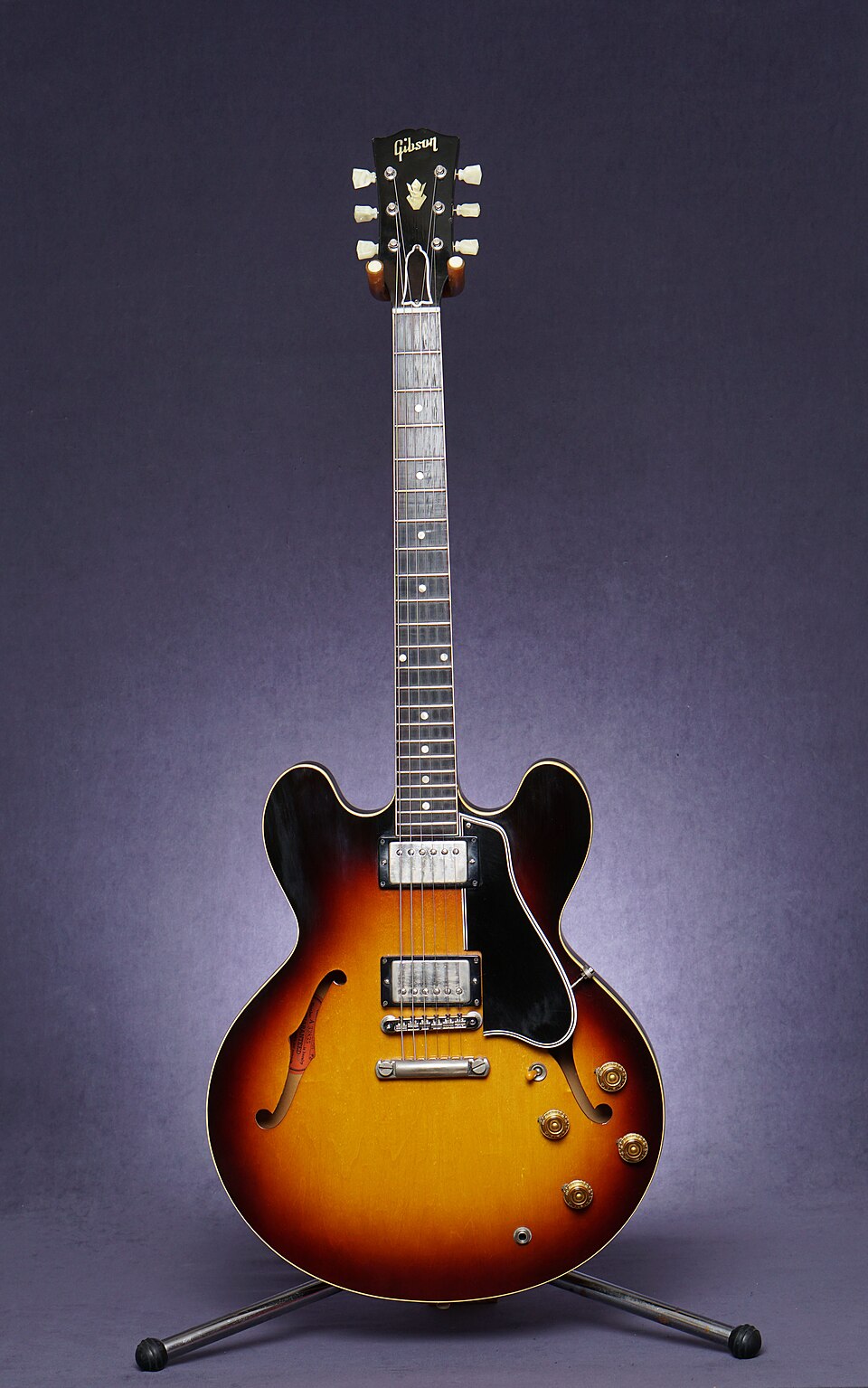
Gibson ES-335 Center-Block (1958)
A solid maple block runs down the center of a hollow double-cutaway body. Pickups and bridge mount into solid maple (suppressing feedback), while hollow wings add acoustic warmth and air.
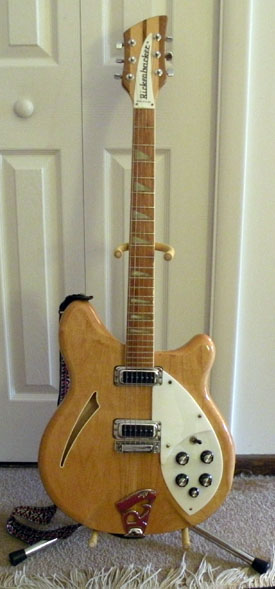
Rickenbacker 360/12 (1964)
Paired 6 standard strings with 6 higher octave strings. Delivered the bright, shimmering, jangly 1960s pop sound defining The Beatles (*A Hard Day's Night*), The Byrds, and Tom Petty.
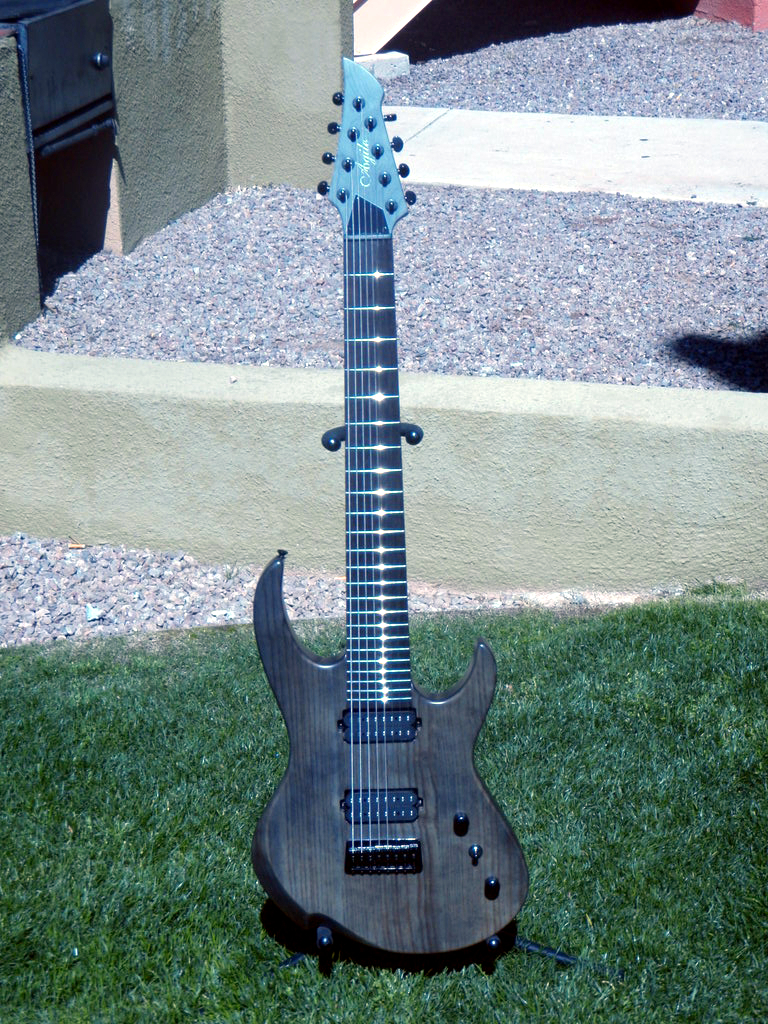
7-String & Multi-Scale Guitars
From Steve Vai's 1990 Ibanez Universe to modern fanned-fret 8-strings: extended low-B and low-F# strings required longer scale lengths (27–28 inches) to maintain string tension and intonation clarity.
The Electric Bass: Leo Fender's Precision Revolution
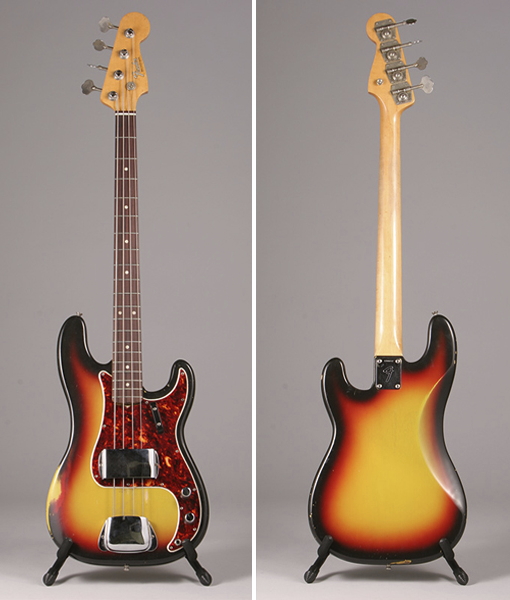
The Fender Precision Bass (1951)
Replaced bulky upright acoustic double basses. The 34-inch scale neck featured guitar-style frets for precise intonation ("Precision"), allowing bassists to match drum volume on stage without feedback.
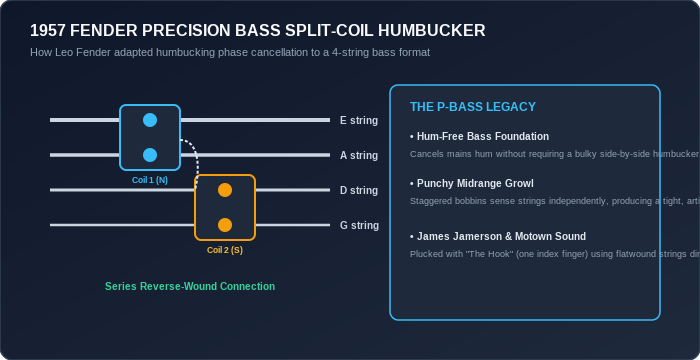
The 1957 Split-Coil Pickup
Two offset coils wired in reverse-wound, reverse-polarity (RWRP) series: one coil senses E and A strings, the other senses D and G strings. Delivers punchy low-end fundamentals while canceling mains hum.

Hofner 500/1 Violin Bass (1956)
A hollow spruce and maple chambered body with short 30-inch scale and flatwound strings. Made famous by Paul McCartney with The Beatles, delivering deep, warm, thumpy, upright-style low frequencies.
1970s–1980s: Superstrats & Locking Tremolos
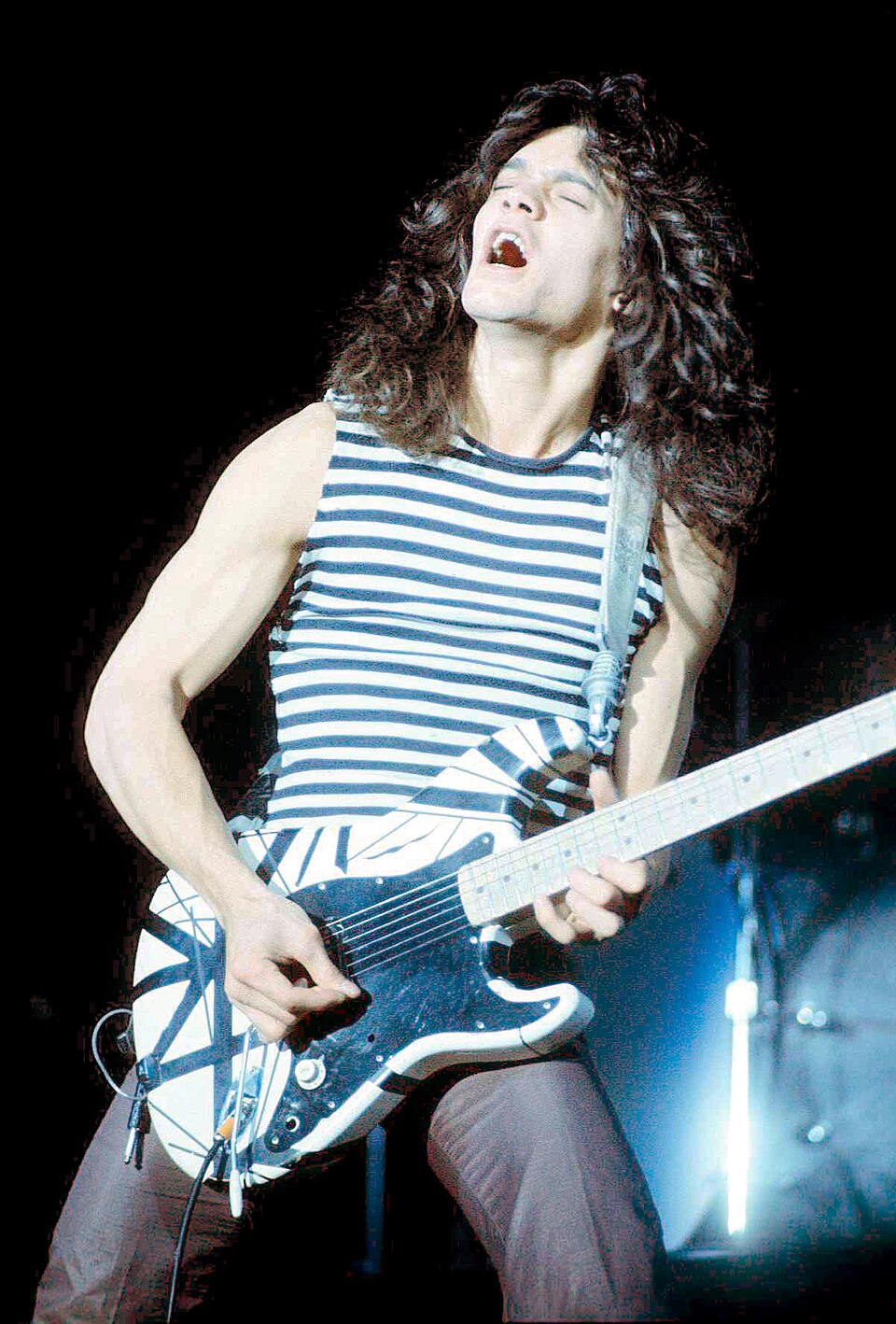
The "Frankenstrat" (1977)
Eddie Van Halen married a Fender Stratocaster body with a slanted Gibson PAF humbucker. Blended Fender's ergonomic tremolo feel with the thick, high-gain overdrive of a Gibson humbucker.
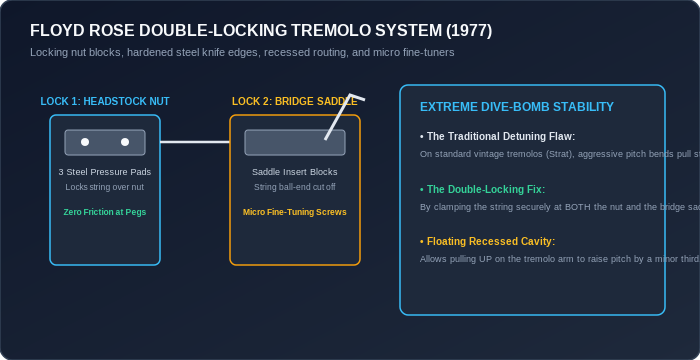
Floyd Rose Double-Locking System
Clamped strings rigidly at both the nut and bridge saddles. Stopped strings from slipping through friction points during aggressive dive-bombs and pull-ups, preserving pitch intonation.
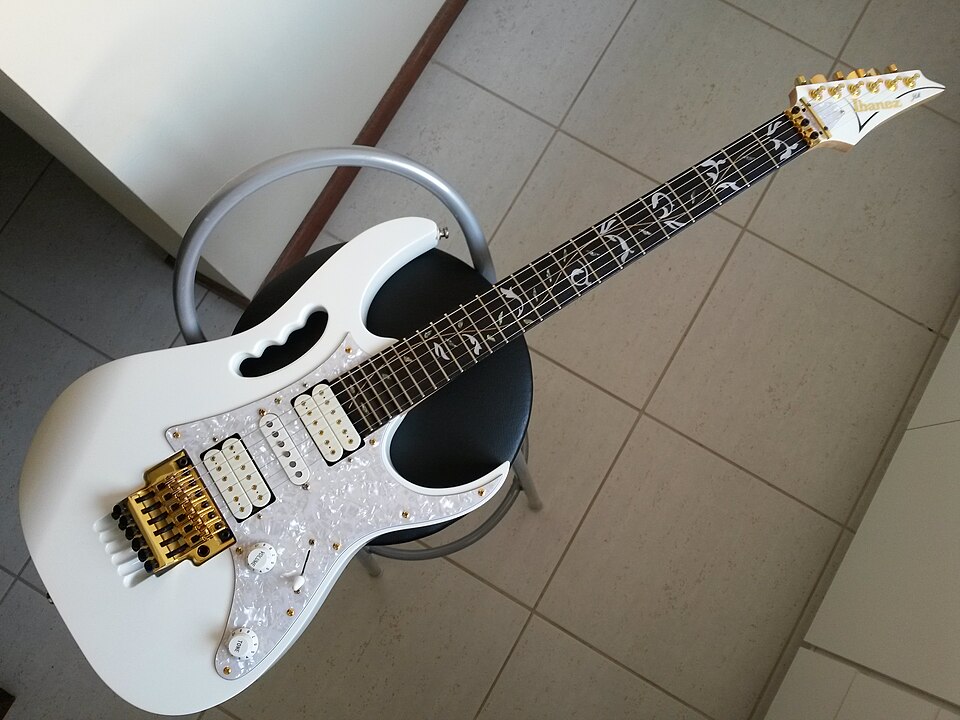
The Ibanez JEM (1987)
Developed with Steve Vai: thin Wizard neck profile, 24 jumbo frets, H-S-H pickup configuration, Lion's Claw tremolo cavity recess, and Monkey Grip handle defining late-1980s virtuoso shred guitars.
1990s–Present: Active Electronics & DSP Modelling
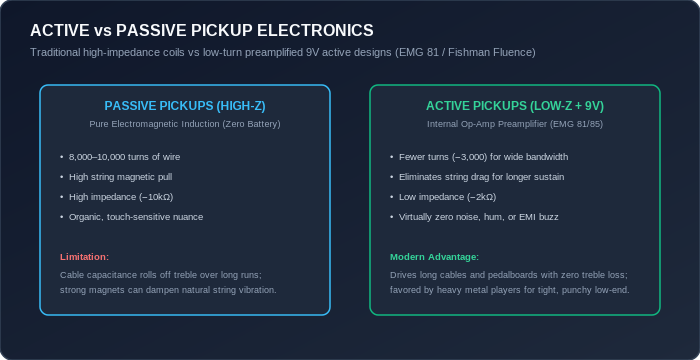
Active Pickups (e.g. EMG 81)
Fewer copper coil windings lower inductance and suppress noise. An onboard 9V-powered discrete transistor preamp boosts signal level and buffers output to low impedance (~10 kΩ), preventing high-end cable loss.
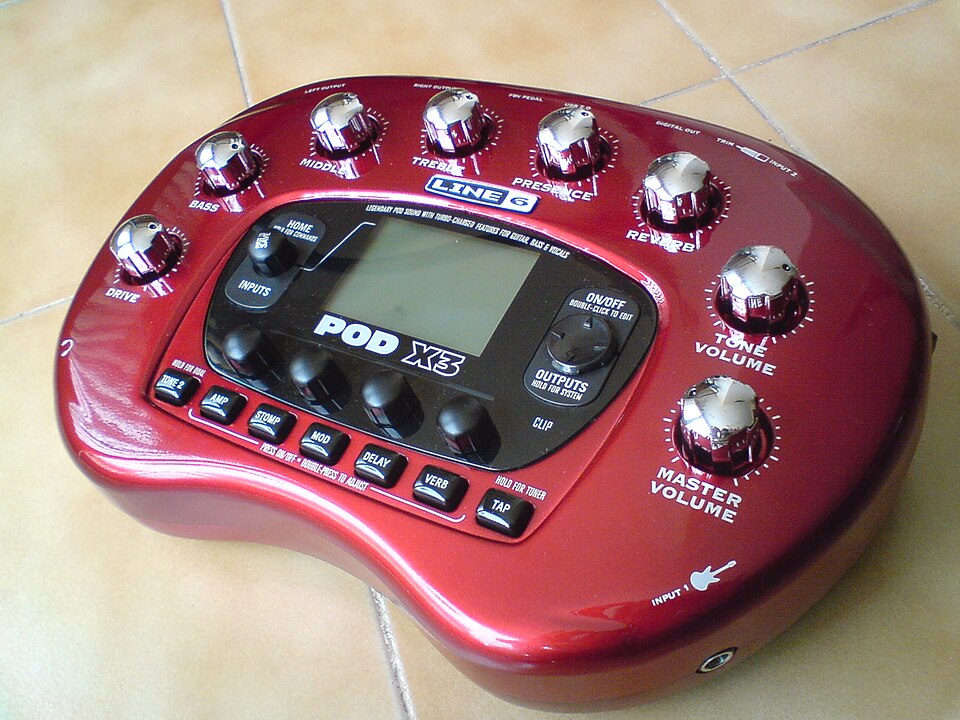
Line 6 POD & Digital Modelling (1998)
Used digital signal processing (DSP) to mathematically calculate non-linear valve saturation, power sag, and tone-stack EQ, allowing guitarists to record authentic tube amp tones silently direct to tape/DAW.
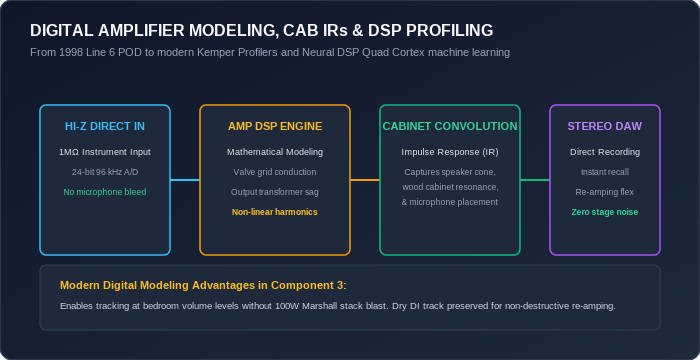
Impulse Response (IR) Convolution
Modern modellers (Kemper, Fractal, Quad Cortex) use convolution algorithms with measured Impulse Responses (IRs) to recreate the linear frequency and phase footprint of real speaker cabs and studio microphones.